Friday, April 25, 2014


Thursday, April 24, 2014
Infighting Between Iraq Insurgent Groups
The increasing violence in Iraq is a clear sign that the
insurgency has made a comeback in the country. The Islamic State of Iraq and
the Levant (ISIS) gets most of the publicity, but there are several other groups
active such as the Baathist Jaish Rijal al-Tariqat al-Naqshibandi, Ansar
al-Sunna, Hamas Iraq, the 1920 Revolution Brigades, the Islamic Army, and
others. While it would appear that these organizations are all working towards
the same goal, overthrowing the government, they have different ideologies and
rivalries. In the last two years these differences have slowly been exposed as
there has been infighting between them. That mostly involves the smaller ones
fighting with the Islamic State.
In April 2014 there were three reports of insurgents
fighting the Islamic State of Iraq and the Levant. April 6,
a story ran that 2 ISIS leaders had been killed by Ansar al-Sunna in southern
Kirkuk in a half hour gunfight. One of the dead was Abu Bakr the Islamic
State’s Wali or governor for the province. The next day a Naqshibandi
leader and his son died at the hands of ISIS in the Hamrin region of Diyala.
Allegedly the Baathists were complaining to the Islamic State about it
kidnapping some of its members in Qara Tapa, and things got out of hand and led
to violence and the two deaths. Finally on April
18 another ISIS commander was killed by Ansar al-Sunna in Rashad, Kirkuk.
One source told Al-Mada the dispute started with some tribal fighters who were
opposed to ISIS. These are the most recent examples, but there are plenty more
reaching back into last year. December
27, 2013 Ansar al-Sunna claimed that ISIS had killed 40 of its members.
That led Ansar to send a message to Al Qaeda leader Ayman al-Zawahiri calling
on him to reign in ISIS. Unfortunately for Ansar, the Islamic State no
longer considers itself part of the larger Al Qaeda network. There was
fighting between the two in Kirkuk and Mosul afterward. Before that on October
14, 3 fighters were killed and others wounded in the fourth clash in four
weeks between Ansar and ISIS. This dispute started when the Islamic State assassinated
a local Sahwa commander, which Ansar believed would turn the tribes against
the insurgency. That proved true as the Sahwa leader’s tribe did declare war on
ISIS. There were also stories that the two groups were arguing over money and
weapons. Initially the two sides started off with setting off improvised
explosive devices against each other, but that quickly escalated to shootings
in September. It’s obvious that Ansar al-Sunna has the biggest problem with the
Islamic State. Each considers itself an Islamist group committed to
international jihad, both want to establish a caliphate, use sectarian rhetoric
to describe Shiites, and are involved in the fighting in Syria. Their major
differences are over tactics and ties to the international jihadist movement.
Ansar worries that ISIS’s actions in Iraq will eventually turn the population
against it like what happened from 2006-2008. Ansar is also connected to Al
Qaeda central, as it originally started out as Ansar al-Islam, a Kurdish branch
of AQ. The Islamic State on the other hand has emerged as an independent
organization no longer affiliated with Zawhiri. The two therefore see each
other as rivals within the Islamist camp. The Naqshibandi has a completely
different ideology based upon Sufism and Baathism. It has said to cooperate
with the Islamic State before to carry out operations, but in the Diyala
instance it appears the two groups got in a turf war. Since the Naqshibandi is the
next largest militant group, and expanding its operations as well with its
Military Councils, perhaps more conflicts over territory will happen in the
future.
The Islamic State has a poor history of cooperation with
other insurgent groups. In both Iraq and Syria it has tried to assert itself as
the leader of the militant movement. At first, it initially works with others,
but eventually it wants the head role, and turns on those that do not go along
with it. There is an obvious rivalry between it and Ansar al-Sunna. Since they
have so much in common they must be competing for the same set of supporters.
The Naqshibandi on the other hand is the second largest militant group in Iraq.
Since ISIS is extending its network across the entire country it must be
stepping on the toes of others like the Baathists. It was these differences and
disputes that eventually gave rise to the Awakening in Anbar and the Sons of
Iraq program across the rest of the country from 2005-2008. Many armed factions
became tired of the heavy-handed tactics of then Al Qaeda in Iraq. That might
eventually happen again. The problem is the Americans were adept enough to see
these differences and play divide and conquer. Baghdad may not be able or
willing to do the same since it sees these armed factions as an existential
threat. It may thus miss out on a great opportunity to cut into the expanding
insurgency.
SOURCES
Buratha News, “The killing of a
leader in the terrorist organization “Naqshibandi” and his son at the hands of
the elements of “Daash” terrorists northeast of Baquba,” 4/7/14
Al Mada, “The killing of a senior
commander in “Daash” in clash with supporters of Ansar al-Sunna south of
Kirkuk,” 4/18/14
National Iraqi News Agency, “3
Gunmen killed in fight between Qaeda, Ansar Assuna south of Kirkuk,” 10/14/13
- “Two leaders of the ISIS killed
in a clash between Al-Qaeda and Ansar al-Sunna south of Kirkuk,” 4/6/14
Al-Qaisi, Mohammed, “Al-Qaeda and Ansar al-Sunna clash in
Kirkuk,” Al Shorfa, 9/23/13
Al-Tamimi, Aymenn Jawad, “Musings
of an Iraqi Brasenostril on Jihad: Comprehensive Reference Guide to Sunni
Militant Groups in Iraq,” Jihadology, 1/23/14
Wednesday, April 23, 2014
Foreign Fighters Helping The Islamic State of Iraq and The Levant (ISIS)
Both the Islamic State of Iraq and the Levant (ISIS) and the
Iraqi government have been talking about the role of foreign fighters more and
more. The Iraqi Security Forces (ISF) have claimed they have killed several foreigners,
all Saudis, while ISIS has had several Internet announcements eulogizing the
death of their foreign cadre. Many of these militants are being used in their
traditional role of suicide bombers, but others are acting as regular gunmen or
leaders in the organization.
 |
| Abu al-Dera the Tunisian who led an ISIS attack upon Kadhim Univ in Baghdad, April 20, 2014 (via Aymenn Jawad al-Tamimi) |
 |
| Two foreign fighters in Anbar from Kazkhstan (left) and Egypt (right), April 2014 (via Aymenn Jawad al-Tamimi) |
It now appears that more foreign fighters are coming to Iraq
again as the conflict has increased. The Islamic State of Iraq and the Levant
made four Internet posts listing all the non-Iraqis who have died for them, and
what operations they were involved in. The first was in March
2014 when ISIS tweeted about all the men it had lost in operations from
April 2013 to March 2014. Of those listed 15 were foreigners made up of 5
Tunisians, 4 Libyans, 3 Egyptians, 1 Syrian, 1 Kuwaiti, and 1 Saudi. Later in
the month the group made another tweet of 30
killed from September 2013 to March 2014 in suicide operations in northern
Baghdad, which included 7 from the Maghreb area meaning Algeria, Libya,
Mauritania, or Morocco, 7 Tunisians, 3 Egyptians, 3 Syrians, 1 Uzbek, and 1 a
Dane. These fighters took part in attacks upon the Sahwa, police, army, and a
raid upon a prison in Baghdad and Salahaddin provinces. The last was named
Brother Faith al Denmarki who took part in a suicide mission against an army
brigade in Taji, Salahaddin in November 2013. A third release was made in April
from ISIS’s southern Iraq division. It claimed 8 foreigners sacrificed
themselves in Babil including 3 Moroccans, 2 Tunisians, 1 Jordanian, 1 Saudi,
and an unidentified man. Then later in the month ISIS’s Diyala Division made
a fourth posting about 26 suicide bombers that included 24 foreigners. 10
were from Tunisia, 5 Saudis, 2 Libyans, 2 Egyptians, 1 was from the Maghreb, 1
Iranian, 1 Tajikistani, 1 Russian or Chechen, and one Dane. The Dane was known
as Abu Khattabl al-Dinmarki and carried out a mission in November 2013. More
recently, ISIS posted a picture of Abu al-Dera the Tunisian who led an assault
upon the Kadhim
University in Baghdad’s Ur district on April 20, 2014 that involved 5 suicide
bombers and killed five and wounded 18. Likewise the Iraqi Security Forces
(ISF) have been claiming that they have been encountering more foreigners as
well. For instance, on March
14, the ISF said they killed 4 Saudis in fighting in Anbar. April
21, the Babil Police Commander told the press that security operations in
the northern section of the province in Jurf al-Sakhr had killed an ISIS leader
who came from Saudi Arabia. The fact that the security forces always claim the
foreign fighters are Saudis and no other nationality raises red flags. It fits
in with Prime Minister Nouri al-Maliki’s increasing attacks upon the Gulf
States as being behind Iraq’s growing violence. In March the premier gave an interview
with France 24 television where he said that Saudi Arabia and Qatar had
declared war on Iraq and were sending terrorists to attack the nation. The fact
that the ISF have fought and killed and foreigners recently would not be
surprising. That they are all Saudi is.
 |
| Danish and Uzbek suicide bombers eulogized by ISIS in March 2014 (Long War Journal) |
Foreigners played a large role in Iraq’s insurgency. The
Jordanian Abu Musab al-Zarqawi came to Iraq before the 2003 invasion hoping to
fight the Americans, and later used that resistance to establish himself as an
international jihadist leader. His networks throughout the Middle East and the
rest of the region recruited large numbers of people to come fight in Iraq. As
early as September
2003, the United States military stated that it held up to 300 foreigners
from 22 countries including Syrians, Iranians, Saudis, Algerians, Indians,
Turks, Malaysians, Somalis, and Palestinians. Some of those came to fight the
Americans before the 2003 invasion like Zarqawi, but others were new arrivals.
In October
2003, the U.S. military estimated that there was as many as 1,000-3,000
foreigners fighting in the country. Two studies done,
one by the Saudi government and another by an Israeli think tank in 2005 found
that the overthrow of Saddam had radicalized many young Muslim men, some of
which decided to come and fight against the Americans. Most of these were used
for suicide bombings. A similar pattern can be seen today as the Arab Spring,
the Syrian civil war, and the renewed fighting in Iraq have gotten a new
generation of young men interested in jihad, and that in turn has brought them
to Iraq and ISIS. They are leaving a deadly legacy in the country.
SOURCES
AIN, “Babel announces killing
leader of ISIL elements in Jurf al-Sakhar,” 4/21/14
- "Casualties of attack targeted Imam Kadhim University rise
to 18 deaths, injuries," 4/20/14
Aswat al-Iraq, “4 Saudis killed in
Anbar,” 3/14/14
Bender, Bryan, “Study cites seeds of terror in Iraq: War
radicalized most, probes find,” Boston Globe, 7/17/05
Bonner, Raymond and Brinkley, Joel, “U.S. intelligence not
consistent in analyzing attacks,” San Francisco Chronicle, 10/28/03
Fang, Bay, “IRAQ: A magnet for angry, fervent men,” U.S.
News & World Reports, 9/29/03
Al Jazeera, “Maliki: Saudi and Qatar at war against Iraq,” 3/9/14
- "Many dead in Iraq violence ahead of vote," 4/20/14
Roggio, Bill, “Dane, Uzbek among
30 suicide bombers eulogized by ISIS,” Long War Journal, 3/8/14
- “ISIS’ ‘Diyala Division’ lauds
foreign suicide bombers, including Dane,” Long War Journal, 4/18/14
- “ISIS’ ‘Southern Division’ praises
foreign suicide bombers,” Long War Journal, 4/9/14
Zelin, Aaron, “The Return of
Foreign Fighters in the Iraq Jihad,” Jihadology, 3/6/14
Tuesday, April 22, 2014
Abuses Of Iraq’s Voting Cards Likely In April Election
Every Iraqi election since 2005 has been tainted by
accusations of cheating. Claims of missing voting boxes, stuffed ballots, etc.
are constantly made after voting is completed, leading to endless demands for
recounts. 2014’s April elections will be no different. This time one of the
likely charges will be about abuses of the new electronic voting cards that the
country’s Independent High Election Commission (IHEC) are using. For weeks now
there have been stories that political parties are buying up the cards to abuse
come April 30.
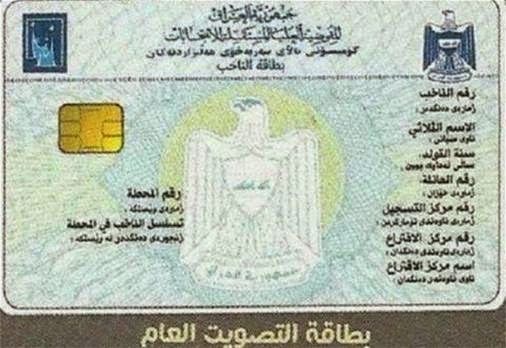 |
| Rather than stopping cheating it appears Iraq's new voting cards will be part of the problem (Alsumaria) |
Apathetic Iraqis and problems with the voter rolls offer
loopholes for political parties to exploit the new cards. Shafaq News for
example interviewed a member of the Election Commission in Kirkuk who said that
voting cards were going for as much as $500 a piece. The article claimed that
people who were not going to vote were willing to sell their cards. With voting
participation at 50% out of approximately 20 million registered voters
that provides a huge pool of people to purchase cards from. In another example,
Niqash ran an article in
April that included a member of the Patriotic Union of Kurdistan who said that
parties in the northern region were buying up voting cards as well. Another
area of potential abuse is the fact that Iraq does not have up to date voter
information. There has not been a census for decades because of the political
differences between the ruling parties. Instead the Election Commission relies
upon information provided by the Ministry of Trade and the food ration system
that it operates. There are plenty of reports about the problems this presents.
The IHEC for instance, announced in March that it had withdrawn 32,000 voting cards
that it found were for the deceased or duplicate names. There are likely
several thousand more of these types of wrongly issued cards still out there,
because of the flawed nature of the voting rolls. Ironically the Election
Commission went with these cards to try to cut down on fraud and cheating. In
October 2013 it signed a $130 million 5-year deal with a Spanish company to
create the voting cards. They have to be produced with one other piece of
identification for anyone to vote. If parties are dishing up hundreds of
dollars however to buy them they will have the money to forge other ID’s as
well. These are obviously huge problems which the IHEC is aware of, but has
limited time and money to try to fix especially since the balloting is only
days away.
The Election Commission cannot be faulted for trying to cut
down on cheating, but it appears that its voting cards are not the answer. The
Commission is handing out the cards throughout the provinces, but the only
security imbedded in the system appears to be the second piece of
identification that has to be shown. That should be easy enough to get around,
and therefore any party that is inclined to can buy up cards from Iraqis who
are willing to part with them. The question is whether this will lead to more
abuse than is usual in the country during elections or if it will just maintain
the current positions of the ruling parties who have the cash and determination
to hold onto power.
SOURCES
Buratha News,
“Election Commission withdraws 11,000 ballots for dead people and 21,000
duplicate cards,” 3/22/14
Hassan, Hayman, “iraq votes 2014:
best laid enrolment plans wrecked by illegal trade in voting cards,” Niqash,
4/3/14
Al Mada, "Commission: we distributed 85% of voter cards and 6 districts in Anbar will be making their voices heard," 4/22/14
Al Mada, "Commission: we distributed 85% of voter cards and 6 districts in Anbar will be making their voices heard," 4/22/14
Shafaq News, “Heated race to buy
voters’ cards in Kirkuk…price varies from 100 thousand dinars to $ 500,”
2/25/14
Monday, April 21, 2014
Iraq’s Northern Kirkuk Oil Pipeline Down And Out For Foreseeable Future
Iraq’s Kirkuk oil pipeline stretches across the northern
section of the country into Turkey. Unfortunately some of the provinces it travels through like Ninewa and Salahaddin are infested with insurgents and
oil smugglers who have constantly attacked it over the last several years.
Usually these bombings only knock the pipeline out of service for a day or two
at the most. At the beginning of March 2014 that dynamic changed. Militants not
only took the pipeline out of commission, but also stayed in the vicinity, and
drove off repair crews. After several failed attempts it now appears that the
Iraqi government has given up trying to repair the line for the time being.
 |
| (Wikipedia) |
Iraq’s insurgents are attempting to cripple the country’s
oil industry in the north. On March
2, 2014 militants blew up the Kirkuk line in Ain al-Jahash in Ninewa
province. A week later the line was struck by two more bombs in a nearby
section. Rather than conduct a hit and run operation as they had done before, militants
stayed in the area after the explosions. Repair crews from the North Oil
Company went out to the damaged section five times to attempt to repair it and
were driven off. Even an army escort was not enough, and reportedly five
workers were either wounded
or killed. Oil Minister Abdul
Karim Luaibi said that the pipeline would be up and running again by the third
week of April, but officials at the North Oil Company told Reuters that it has
given up on trying to fix it for the time being because of the danger involved.
Insurgents have attacked the Kirkuk line for years now. For example, at the
beginning of January
and the middle
of February it was hit in Salahaddin and Ninewa respectively. Last year,
the line was attacked 54
times by militants and oil smugglers. The former are now changing tactics
by trying to keep it offline for an extended period of time. Before they might
not have been strong enough to attack and hold a stretch of the line, but now
they are testing their strength and winning right now.
Knocking the pipeline out of service is having political and
economic repercussions. First, the storage tanks in the north are now full
because of the shut down. That has forced the North Oil Company to cut back
production at the Kirkuk and Bai Hassan oil fields from around 550,000 barrels
a day to 225,000, and then send the remaining production to the Baiji and
Kirkuk refineries. Second, the Kurdistan Regional Government (KRG) and Baghdad
have been in a dispute over oil policy for months. Prime Minister Nouri
al-Maliki recently used the power of the purse to push the matter, and stopped
sending Kurdistan its monthly share of the budget. That put immense pressure
upon the region, which depends upon the central government for up to 95%
of its budget. After weeks of threats and accusations the two sides came to
a short-term deal of having the Kurds export
100,000 barrels a day as a good will gesture. That was supposed to start
in April, but because the Kirkuk line is down and out that can’t go
forward. Iraq is an oil dependent country so every day that the pipeline is not
operating it is costing the country money that it desperately needs. It is
harming the Oil Ministry’s plans for a large increase in exports this year as
well. The northern line carries around 15% of Iraq’s total exports each year,
and is essential for Iraq to reach its goal. The insurgents are also holding up
the deal between Irbil and Baghdad, which if ever implemented could go a long
way in breaking the ice between the two sides. The militants are therefore achieving
far more than just hurting Iraq’s economy with their actions.
Now that the insurgency is back it is upping its ante
against the government. It has constantly attacked the Kirkuk pipeline, but
with its added strength it has decided to take a stand at least for now, and
keep repair crews away from it shutting down the line for more than a month
now. This is depriving the country of not only money, but also affecting an
attempt by the KRG and Baghdad to resolve its long-standing dispute over energy
policy. Because the security forces are stretched thin fighting in Anbar and
other provinces it doesn’t appear that it has the means to retake the section
of the pipeline held by insurgents. More importantly, it doesn’t have the
forces to protect the entire line even after the section is fixed meaning that
this may happen again in the future if armed factions wanted to.
SOURCES
Adel, Shaymaa, “Iraq jihadist group ISIS occupies long
sections of oil pipeline via Turkey,” Azzaman, 4/15/14
Coles, Isabel, “UPDATE 2-Kurds to export some oil through
Iraq pipeline as ‘goodwill gesture,’” Reuters, 3/20/14
Hurriyet Daily, “Iraq-Turkey oil exports via Kirkuk halted
for three weeks,” 3/19/14
International Crisis Group, “Iraq And The Kurds: The
High-Stakes Hydrocarbons Gambit,” 4/19/12
Al Mada, “Nineveh: 40 days have passed to stop Ceyhan oil
pipeline and the security forces do not protect engineers,” 4/13/14
Al-Najar, Kamaran, “Militants chase repair crews from bombed
pipeline,” Iraq Oil Report, 3/14/14
Al-Najar, Kamaran, Osgood, Patrick, Lando, Ben, “Kurdistan
‘goodwill’ exports stalled,” Iraq Oil Report, 4/2/14
Al-Sinjary, Ziad and Rasheed, Ahmed, “At “Donkey Springs”,
bombers choke off Iraq oil exports,” Reuters, 4/10/14
Van Heuveln, Ben, Lando, Ben, and Osgood, Patrick, “Under
pressure from Baghdad, Kurds offer limited exports,” Iraq Oil Report, 3/21/14
Voice of
Russia, “Oil pumping from Iraq to Turkey discontinued after pipeline blast,”
1/3/14
Subscribe to:
Posts (Atom)
This Day In Iraqi History - Nov 14 British army ordered to seize Basra vilayet WWI
1914 Sheikh of Islam called for jihad against British and French during WWI Call was repeated in all Sunni mosques in Mosul, Baghdad a...

-
 Napoleoni, Loretta, Insurgent Iraq, Al Zarqawi and the New Generation , New York: Seven Stories Press, 2005 In Insurgent Iraq autho...
-
 Dr. Michael Izady of Columbia’s School of International and Public Affairs recently gave an interview to the Swiss-based International Relat...
-
 Professor Nadje Al-Ali is a professor of gender studies at SOAS, University of London. She has authored several books and articles...