Showing posts with label Baathists. Show all posts

Monday, August 11, 2025

Maliki Starts Playing On Baathist Card For 2025 Iraq Elections


Al Mada reported that Nuri al-Maliki and his State of Law list are pushing a Baathist threat to Iraq once again. There are claims that up to 500 candidates will be banned by the Accountability and Justice Commission for their Baathist ties and that there are 27,000 former regime members within the government. A parliamentarian told Al Mada that these accusations are being exaggerated. This is a tried and true theme of Maliki and his followers. They most infamously used it in the 2010 election when hundreds of people were struck from lists for their connections to Saddam.

Thursday, June 8, 2023

Review A People’s History Of Iraq, The Iraqi Communist Party, Workers’ Movements, and the Left 1924-2004

Salucci, Ilario, A People’s History Of Iraq, The Iraqi Communist Party, Workers’ Movements, and the Left 1924-2004, Chicago: Haymarket Books, 2005


Ilario Salucci wrote a very short and concise history of the Communists in Iraq. The Iraqi Communist Party (ICP) used to be the largest in the country, leading protests and being one of the main opposition groups. However it consistently undermined itself following Soviet doctrine and policy. The author documents how the Communists constantly subordinated themselves to other groups believing that a nationalist bourgeoise and capitalism had to develop before socialism could be established. The party therefore faced defeat after defeat at its own hands.

Thursday, January 12, 2023

Review Republic Of Fear, The Politics of Modern Iraq

Makiya, Kanan, Republic Of Fear, The Politics of Modern Iraq, Berkeley, Los Angeles, London: University of California Press, 1998


Originally released in 1989 Kanan Makiya’s Republic of Fear, The Politics of Modern Iraq was a huge hit in the West as a diatribe against the rule of Saddam Hussein. The front cover has a blurb from the New York Times Book Review saying it was “required reading” to understand Iraq. Subsequent histories of the country would often cite this work. What people usually said about it however and what it was actually about are very different. Republic of Fear was not focusing upon the crimes of Saddam through murder, torture and imprisonment although it starts with that, but was actually an argument against Baathist ideology. Makiya argued that the problems with Iraq started with pan-Arabism and Baathism which led to Saddam but his thesis was deeply flawed and full of major problems.

Thursday, December 8, 2022

Review War, Institutions, and Social Change in the Middle East

Heydemann, Steven, Editor, War, Institutions, and Social Change in the Middle East, Berkeley, Los Angeles, London: University of California Press, 2000


War, Institutions, and Social Change in the Middle East is an anthology of around a dozen articles about how war impacted the Middle East. Unlike most collections this one is remarkably consistent with one interesting piece after another. The editor Steven Heydemann wanted to put together articles that contradicted the Eurocentric view dominant in academia at the time that the changes Europe went through during wars in the 1600-1700s were applicable around the world.

Sunday, August 21, 2022

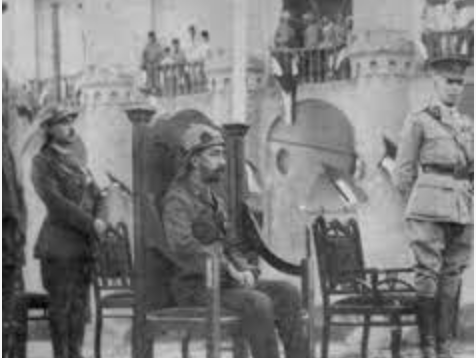
This Day In Iraqi History - Aug 21 Faisal coronated as 1st king of Iraq

(Wikimedia)


1916 UK parliamentary inquiry began into defeat at Kut

1921 King Faisal’s coronation Started negotiations over Anglo-Iraq treaty

(Musings On Iraq review The Role of the Military In Politics, A case study of Iraq to 1941)

(Musings On Iraq review Supremacy And Oil, Iraq, Turkey, and the Anglo-American World Order, 1918-1930)

(Musings On Iraq review Imagining The Nation, Nationalism, Sectarianism and Socio-Political Conflict in Iraq)

(Musings On Iraq review The Chatham House Version and other Middle-Eastern Studies)

(Musings On Iraq review A History of Iraq)

(Musings On Iraq review Empires of the Sand, The Struggle For Mastery In The Middle East 1789-1923)

1950 Nuri al-Said threatened to revoke license of transport company if didn’t fill quota of shipping 500

Jews out of Iraq per day

1965 Col Fakhry retired and 318 officers arrested for being in an underground political

group linked to Communists

(Musings On Iraq review Red Star Over Iraq, Iraqi Communism Before Saddam)

(Musings On Iraq A History Of The Iraqi Communist Party Interview With Univ of East Anglia’s Johan Franzen)

1969 Bakr govt executed opponents in central Baghdad Meant to rally support for regime

1996 US Asst Sec of State for Nera Eastern Affairs Pelletraeu told Barzani to talk with Talabani to try to

stop fighting Barzani said US had to talk to Iran and stop it from interfering in Kurdistan

2002 Bush told press he had patience on Iraq and was thinking of all the options Part of strategy to

privately work on war plans while publicly denying it

(Musings On Iraq review Leap of Faith, Hubris Negligence, and America’s Greatest Foreign Policy

Tragedy)

(Musings On Iraq Review Hubris, The Inside Story of Spin, Scandal, And The Selling Of The Iraq War)

(Musings On Iraq review The Bush Administrations and Saddam Hussein, Deciding on Conflict)

(Musings On Iraq review Plan of Attack: The Definitive Account Of The Decision To Invade Iraq)

2003 Sec State Powell asked UN Security Council to pass resolution encouraging foreign countries to

provide troops for Iraq

2003 Ali Hassan al-Majid “Chemical Ali” captured by US forces

2005 Interior Minister Jabr said that stories of Iran supplying weapons to Iraqi militias were exaggerated

(Musings On Iraq A History Of Iranian Weapons Shipments To Iraq Interview With Arkenstone Blog’s Galen Wright)

(Musings On Iraq Iran’s Policy Towards Iraq)

2005 Islamic Party leader Tariq Hashemi said constitution would not stop violence in Iraq because most

politicians not recognized by public

2005 Isam al-Rawi of Muslim Scholars Association advocated US withdrawal reforming security forces

amnesty for Baathists talks with insurgency

(Musings On Iraq Spiritual Leader To Iraq’s Insurgency Harith Dhari Dies In Exile)

2006 2nd trial started for Saddam accused of genocide during Anfal campaign

(Musings On Iraq Iraq’s Anfal Campaign And The Destruction Of The Kurdish Opposition)

2006 Sheikh Abu Risha’s Anbar Emergency Council declared war on Al Qaeda in Iraq in Ramadi Drew

fighters from tribes Jaish al-Haq Numan Brigade 1920 Revolution Brigades

(Musings On Iraq US Army History of Iraq War Vol 1 – Chapter 21 Hope In Ramadi)

(Musings On Iraq review A Soldier’s Dream, Captain Travis Patriquin and the Awakening of Iraq)

2006 Al Qaeda in Iraq destroyed new Jazeera police station in Ramadi with suicide car bomb Killed head

of Albu Jassim tribe who aligned with US and provided tribesmen for Ramadi police Beheaded him and left body in desert

(Musings On Iraq US Army History of Iraq War Vol 1 – Chapter 21 Hope In Ramadi)

(Musings On Iraq How A Change In Perceptions Led To The Anbar Awakening)

(Musings On Iraq interview with author Carter Malkasian on Anbar Awakening)

(Musings On Iraq review Illusions of Victory, The Anbar Awakening And The Rise Of The Islamic State)

(Musings On Iraq review Suicide Bombers In Iraq, The Strategy and Ideology of Martyrdom)

(Musings On Iraq review Confronting Al Qaeda, The Sunni Awakening and American Strategy In Al Anbar)

(Musings On Iraq review The Marines Take Anbar, The Four-Year Fight Against Al Qaeda)

(Musings On Iraq review The Sheriff of Ramadi, Navy SEALS and the Winning of Anbar)

2006 Bush said Saddam had relations with Zarqawi Disputed by CIA who said no ties between two

(Musings On Iraq review What Happened, Inside the Bush White House and Washington’s Culture of Deception)

2007 Report 3 attempts to replace PM Maliki including from ISCI within his own Dawa and from Allawi

            U.S. trying to prop up his govt

2008 Report Iraq’s Finance Min counted all money appropriated in budget as spent when little of it actually

was Govt claimed it spent 57% of the 2008 budget by Aug when only 18% had been used

(Musings On Iraq NY Times Finds Iraq Spends Even Less Of Its Budget)

2008 Report US commanders started telling Sahwa in north Iraq program ending and they had to get jobs

because govt wouldn’t integrate them

(Musings On Iraq What’s In The Future For The Sons of Iraq?)

2008 Report Gen Petraeus said Maliki govt purposely not integrating Sahwa Defense Ministry officials

talked about arresting Sahwa by end of 2008

2008 Captured ISI member said group running out of money Could carry out operations but no major

attacks Few foreign fighters coming

2010 Kurdish MP said Peshmerga would remain in disputed areas until Article 140 implemented

Said constitutionally legal for them to stay

2010 KRG made series of demands of Maliki govt Wanted revenue sharing law Oil law Wanted

KRG laws to trump federal laws in disagreements over KRG oil contracts In return Kurds said they would support 2nd term for PM Maliki

2010 100s protested in Dhi Qar over lack of electricity Clashed with police

2012 Report Maliki govt not agreed to pay oil companies in KRG 2010 Baghdad-KRG came to agreement

over KRG exporting oil Baghdad agreed to pay oil companies in KRG Dep PM Shahristani and Oil Min Luaibi not agreed to that Apr 2012 KRG stopped exports over budget dispute Aug KRG restarted exports

2013 Report MP on parliament integrity comm said around $9 bil/yr laundered Said 10% of govt contracts

payoffs to officials who then laundered money MP said top officials in Baghdad and provinces involved Made fake govt deals Then laundered money to send it out of Iraq

(Musings On Iraq Corruption In Iraq An Interview With Stuart Bowen Special Inspector General for Iraq Reconstruction)

(Musings On Iraq Iraq’s Trouble Fighting Corruption Interview With Vincent Foulk Former US Anti-Graft Official)

2013 Report ISF unable to stop ISI’s Soldiers’ Harvest Security worsened after PM Maliki ordered ISF

raid on Hawija protest site Afterward insurgents took Suleiman Beq During op to free town Kurdish brigade of 4th Div refused orders Cmdr and 600 soldiers of brigade referred to court martial ISF only able to regain control of Suleiman Beq by making deal with insurgents and local leaders Aug Foreign Min Zebaari asked US for military aid Since 07 PM Maliki made loyalists cmdr in ISF 1 was Gen Ghanam Commanded brigade in 6th Div in Abu Ghraib Criticized for heavy handed tactics Made cmdr of 2nd Div in Ninewa and also criticized for tactics Made cmdr 17th Div in southern Baghdad/Babil Jul resigned Source said 17th Div investigated because troops were going AWOL because of Ghanam’s leadership Afterward Defense Min said it gave amnesty for any AWOL soldiers from 17th Div 10% of ISF ghost workers Jul Defense Min replaced head of Anbar Ops Command for refusing to arrest protest leaders

2014 IS and Mujahadeen Army fought in Garma Anbar 4 IS members killed by Naqshibandi in Jalawla

Diyala

(Musings On Iraq review The Caliphate At War, Operational Realities and Innovations of the Islamic State)

2015 Protests in Baghdad Maysan Dhi Qar Wasit Diyala Basra Kirkuk Qadisiyah Salahaddin Najaf Karbala

Babil demanding reform

2015 Police attacked reporters from 3 TV stations trying to cover day’s protests

2015 Report US announced Haji Mutazz IS commander in charge of military ops in Iraq killed in

drone strike near Mosul

(Musings On Iraq Islamic State’s Second In Command Killed For 3rd Time In Iraq)

2015 Fmr Trade Min Sudani convicted on 3 corruption charges $4-$8 bil missing from ministry

Bought expired food and charged Ministry full price Bought food and kept it for themselves to sell on black market Bought goods for double the prices Sudani signed contract with company owned by his son for $50 mil for old tea that was only worth $20 mil Bought contaminated milk from China Found $8 mil in expired food in warehouse Sudani’s brother and nephew got $40 in kickbacks from every ton of sugar imported by ministry Sudani used some of money to fund PM Maliki’s State of Law in 2009-10 elections

(Musings On Iraq Corruption In Iraq An Interview With Stuart Bowen Special Inspector General for Iraq Reconstruction)

(Musings On Iraq Iraq’s Trouble Fighting Corruption Interview With Vincent Foulk Former US Anti-Graft Official)

2015 Report Est $300-$350 bil stolen from Iraq since 03 Finance Min Zebari said bloated salaries

cost $3 bil/mo PM Abadi said 1 official had 900 bodyguards Head of parliament’s integrity comm said it sent 500 corruption cases for investigation in 2014 but most dropped PM Abadi’s office said it has no power over judiciary and therefore can’t reform it

2016 Tribal council in Anbar blamed Hashd for burning houses and orchards east of Ramadi and in

            Albu Shihad and another town

2016 Report Peshmerga Min said it would not withdraw from disputed areas after defeat of IS Said

needed territory for defense

2018 Report 2006 Turkey began building Dam Started filling dam Jun 2018 Turkey told Iraq about

construction during entire time 2017 Turkey’s Water Min met with Iraq’s Water Min 4 times in 2017 Iraqi group went to Turkish dam in Dec 2017 Drastically cut water supply to Iraq Govt did nothing during entire process

(Musings On Iraq Iraq Failed To Prepare For Water Crisis)

2018 Report Abadi govt asked US for exemption from Iran sanctions US couldn’t do much to

enforce sanctions Neither could Iraq because had no real control of border Iraq had major energy contracts with Iran 

2018 Iran said it would restart electricity exports to Iraq Stopped because Iraq wasn’t paying its

bills

2018 PM Abadi directive cancelled order by Dep head of Hashd Abu Muhandis who told Hashd to

leave liberated cities Abadi said Hashd units couldn’t move without coordination of Joint Ops Command and commander in chief

2019 Deputy head of Hashd Commission Abu Muhandis said US behind attack on Balad Air Base Said

US helped Israeli drones fly from Azerbaijan to hit Iraq

(Musings on Iraq Pro-Iran Hashd Brigades And Now Israeli Strikes Making A Joke Of PM Abdul Mahdi’s Claims Iraq Neutral In Regional Conflicts)

2020 Protesters burn govt office in Basra City after assassinations of activists there

(Musings On Iraq Ebb And Flow Of Protests In Iraq)

2020 Protest activist assassinated in Baghdad as part of intimidation campaign vs demonstrators

(Musings On Iraq UN Report On Violence Against Iraqi Protesters)

(Musings On Iraq United Nations Faults Iraq For Failing To Protect Protesters)

View the Iraq History Timelines 

Thursday, July 21, 2022

Review Republican ‘Iraq, A Study in ‘Iraqi Politics since the Revolution of 1958

Khadduri, Majid, Republican ‘Iraq, A Study in ‘Iraqi Politics since the Revolution of 1958, London, New York, Toronto: Oxford University Press, 1969


Majid Khadduri was one of the first prominent Iraqi historians writing in English. He was born in Iraq and then came to work at Johns Hopkins University. Starting with his 1960 Independent Iraq he published books on the country covering the monarchy up to the Gulf War. His early histories were indispensable because he had access to many of the people involved in events. Republican ‘Iraq, A Study in ‘Iraqi Politics since the Revolution of 1958 covers the “revolutionary regimes” of General Qasim, the Baath and the Arif brothers that ruled from 1958 to 1968. Khadduri’s thesis was that the military stepped into politics to overthrow the old regime and created an autocratic form of government.

Friday, June 17, 2022

Review Memories of State, Politics, History, and Collective Identity In Modern Iraq

Davis, Eric, Memories of State, Politics, History, and Collective Identity In Modern Iraq, Berkeley, Los Angeles, London: University of California Press, 2005


Memories of State, Politics, History, and Collective Identity In Modern Iraq is an academic look at how the Iraqi elite tried to forge a common history and political culture to bring the populace under its control. Author Professor Eric Davis argues that this effort was never successful for two reasons. First, the country was divided between nationalists and pan-Arabists for its first thirty years of its existence leading to constant instability. Eventually the pan-Arab Baath Party came to power but it quickly gave up those ideas for a cult of personality around Saddam Hussein which was rejected by wide swaths of the populace. Davis’ argument is convincing in some parts and has faults in others.  

Thursday, January 13, 2022

Review Iraq, Eastern Flank of the Arab World

Helms, Christine Moss, Iraq, Eastern Flank of the Arab World, Washington D.C.: Brookings Institution, 1984


Iraq, Eastern Flank of the Arab World was published by the Brookings Institution in 1984 to educate American think tankers, politicians and policy makers about Iraq when it was becoming more important during the Iran-Iraq War. The author Christine Moss Helms went on two government sponsored tours of the country in the 1980s. She took many of its claims at face value leading to some laughable sections of the book. Most important of which was that Saddam Hussein was not the sole leader of the country. This made the book useless.

Wednesday, October 20, 2021

Review Iraq Since 1958, From Revolution To Dictatorship

Farouk-Sluglett, Marion and Sluglett, Peter, Iraq Since 1958, From Revolution To Dictatorship, New York: I.B. Tauris, 2003


Iraq Since 1958, From Revolution To Dictatorship by Marion Farouk-Sluglett and Peter Sluglett is one of the seminal Iraqi History books in English. It covers the history of Iraq from the monarchy to Saddam Hussein’s rule in the 1990s. The Slugletts main focus is on the governments that came after the 1958 coup and how they struggled to stay in power because they lacked a popular base.

Thursday, September 2, 2021

Review Saddam’s Word, Political Discourse In Iraq

Review Bengio, Ofra, Saddam’s Word, Political Discourse In Iraq, New York: Oxford University Press, 1998


Saddam’s Word, Political Discourse In Iraq by Ofra Bengio is an analysis of the language and rhetoric used by the Baath Party and Saddam Hussein. It explores what words and phrases were popular, their provenance and then tries to explain how and why they were selected to further Baathist rule in Iraq. It’s a very interesting study of how the Iraqi government attempted to rally the public to support its policies using history and Islam.

Thursday, January 28, 2021

Review Iraq at the Crossroads: State and Society in the Shadow of Regime Change

Dodge, Toby and Simon, Steven, Edited by, Iraq at the Crossroads: State and Society in the Shadow of Regime Change, Oxford, New York: Oxford University Press, 2003


Iraq at the Crossroads: State and Society in the Shadow of Regime Change came out of a conference held in October 2002 at the International Institute for Strategic Studies to discuss Iraqi society and politics and how the country might react to the impending U.S. invasion. The book is an anthology of the papers presented by Judith Yaphe, David Ochmanek, Toby Dodge, Isam al-Khafaji, Amatzia Baram, faleh Jabar, Gareth Stansfield and Michiel Leezenberg. It’s interesting to see what the authors predicted and what actually happened after the overthrow of Saddam. More importantly the later part of the book has interesting chapters on Iraq under Saddam.

Friday, September 25, 2020

Review Saddam, His Rise and Fall

Coughlin, Con, Saddam, His Rise and Fall, New York, London, Toronto, Sydney: Harper Perennial, 2005


Saddam, His Rise and Fall by Con Coughlin is a wildly inconsistent biography of Saddam Hussein. On the good side it connects Saddam with the history of Iraq providing lots of background to his life and the country he ruled. One bad aspect was Coughlin liked sensationalist stories which were easy to find about a dictator like Saddam. The bigger problem was that it bought into Britain and America’s justification for the 2003 invasion that Iraq had WMD and was connected to Al Qaeda. Coughlin’s thesis was that Saddam made an unexpected rise through the Baath Party and then onto leading Iraq.

Wednesday, July 8, 2020

Review Socialist Iraq, A Study in Iraqi Politics Since 1968


Khadduri, Majid, Socialist Iraq, A Study in Iraqi Politics Since 1968, Washington D.C.: The Middle East Institute, 1978

Majid Khadduri was a professor at Johns Hopkins University. He wrote four books about Iraq. This was the third after Independent Iraq: A Study in Iraqi Politics, 1932-1958 and Republican Iraq: A Study in Iraqi Politics Since the Revolution of 1958. All of his books were known for their detailed histories since independence and his access to Iraq’s top officials. Socialist Iraq, A Study in Iraqi Politics Since 1968 for instance was based upon three trips to Iraq in 1974, 1976 and 1977 that included interviews with President Ahmed Hassan al-Bakr, his lieutenant Saddam Hussein, various ministers and one of the founders of the Baath Party Michel Aflaq. This book and his last one on Iraq, The Gulf War, The Origins and Implications of the Iraq-Iran Conflict, showed a decline in his writing as he became a fan of the Baath. Socialist Iraq for instance took everything Bakr’s government told him at face value, and laid praise upon the president and Saddam Hussein.

Friday, January 10, 2020

Review Understanding Iraq, the Whole Sweep of Iraqi History, from Genghis Khan’s Mongols to the Ottoman Turks to the British Mandate to the American Occupation


Understanding Iraq was one of many book written because of the 2003 invasion. Historian William Polk had decades of experience with that nation and even lived there for a time in the 1950s. The purpose of his book was to try to educate the West about Iraq and draw parallels between the past and present. Polk largely succeeded although there were a few problems along the way.

Thursday, December 26, 2019

Review Culture, History & Ideology in the Formation of Ba’thist Iraq, 1968-89


Review Baram, Amatzia, Culture, History & Ideology in the Formation of Ba’thist Iraq, 1968-89, New York: St. Martin’s Press, 1991

Culture, History & Ideology in the Formation of Ba’thist Iraq is a very short and concise history of the Baath Party’s move away from pan-Arabism to a new form of Iraqi nationalism that occurred after it took power for the second time. The Baath originally pushed a radical and revolutionary ideology of overthrowing Arab regimes and championed the Palestinians against Israel. A series of internal and external events however, changed it to focus upon securing its position within Iraq after the 1968 coup. University of Haifa’s Dr. Amatzia Baram provides a convincing argument for why this occurred and how it played out.

Thursday, November 21, 2019

This Day In Iraqi History - Nov 21


1914 British troops entered Basra after Ottomans abandoned city
1926 Jaffar al-Askari became PM of Iraq for 2nd time
1927 King Faisal asked for full Iraqi independence and ending roll of British High Commissioner in
negotiations over new Anglo-Iraq Treaty
1946 PM Umari forced to resign in aftermath of Kirkuk Massacre where oil strikers killed
1946 Nuri al-Said became premier 4th time
(Musings On Iraq interview with Historian Phebe Marr comparing PM Said with PM Maliki)
(Musings On Iraq book review of ‘Independent Iraq’ The Monarchy & British Influence, 1941-1958)
1983 Iran’s Op Wa al-Fajr 4 ended Took 180 sq mi of land in Iranian and Iraqi Kurdistan Iran lost
5000 dead 15,000 wounded Iraq lost 2800 dead
(Musings On Iraq interview with author Anthony Tucker-Jones on Iran-Iraq War)
(Musings On Iraq interview with author Tom Cooper on Iran-Iraq War)
(Musings On Iraq book review The Iran-Iraq War 1980-1988)
(Musings On Iraq book review Iran-Iraq War, The Lion of Babylon, 1980-1988)
(Musings On Iraq book review The Iran-Iraq War)
(Musings On Iraq book review Iran-Iraq War Volume 4: The Forgotten Fronts)
1997 UN weapons inspectors returned to Iraq
(Musings On Iraq article UN Inspectors Were Right Iraq Was Not A Threat)
(Musings On Iraq article Iraq’s Rejection of UN Inspectors Led To Mistrust Over WMD and 2003 Invasion)
(Musings On Iraq article Charles Duelfer’s Account Of The End Of The 1990s U.N. Inspections)
1998 Adviser to UN chief said could never 100% prove WMD disarmament and at some
            point inspections became political and impossible to prove negative
2001 Bush told Natl Sec Adv Rice he wanted Def Sec Rumsfeld to start planning for Iraq
2001 Bush told Def Sec Rumsfeld to update war plans for Iraq Wanted it done secretly Was first
official step in Iraq invasion
(Musings On Iraq book review of Shaping the Plan for Operation Iraqi Freedom, The Role of Military Intelligence Assessment)
(Musings On Iraq book review Wanting War: Why the Bush Administration Invaded Iraq)
(Musings On Iraq book review Leap of Faith, Hubris Negligence, and America’s Greatest Foreign Policy
Tragedy)
(Musings On Iraq Review Hubris, The Inside Story of Spin, Scandal, And The Selling Of The Iraq War)
(Musings On Iraq book review The Bush Administrations and Saddam Hussein, Deciding on Conflict)
(Musings On Iraq book review Plan of Attack: The Definitive Account Of The Decision To
Invade Iraq)
2002 NATO summit Bush was talking about war with Iraq and using new UN inspections as
catalyst for action
2003 UN turned over Oil for Food program to CPA
2003 UK intel report Badr Brigade maintained close ties to Iran that armed and funded it
(Musings On Iraq article on Iran using Badr in post-Saddam Iraq)
(Musings On Iraq article on the history of Badr Organization)
2004 Iraq Election Commission announced vote for transitional assembly to draft constitution would
happen 1/30/05 along with provincial vote
2006 Iraq and Syria announced renewal of diplomatic relations which were broken during Iran-Iraq War
2006 UN reported 3,709 civilians killed in Oct 06 was highest since 2003 invasion
2006 Report US training mission for Iraqi forces full of problems Officers leading teams poorly picked Many
hadn’t seen combat Didn’t understand mission and weren’t prepared Didn’t have standardized guidelines for mission Didn’t get support from US military Didn’t get supplies and enough interpreters Didn’t get full teams
2007 Gen Petraeus said nuber of foreign fighters coming to Iraq down by about 1/3 in part due to greater
interdiction by Syria
2009 Report on failed US funded reconstruction projects $270 mil water plant in Nasiriya only worked at
limited capacity because too sophisticated for Iraqi workers $4 mil maternity hospital in Hilla doesn’t have staff of enough supplies Iraqis never trained on equipment US installed $98 mil wastewater treatment plan in Fallujah only reached 1/3 of homes because govt didn’t deliver fuel $7.9 mil hospital in Baghdad didn’t have staff or supplies so it was closed $165 mil Basra Children’s Hospital was $115 mil over budget
(Musings On Iraq More On Wasted Reconstruction Projects In Iraq) 

View the Iraq History Timelines 
Thursday, October 17, 2019

Review Iraq in Wartime, Soldiering, Martyrdom, and Remembrance


Review Khoury, Dina Rizk, Iraq in Wartime, Soldiering, Martyrdom, and Remembrance, New York: Cambridge University Press, 2013

Dina Rizk Khoury’s goal in Iraq in Wartime, Soldiering, Martyrdom, and Remembrance was to analyze how the Baath Party adapted its rule during two wars, the Iran-Iraq War and Gulf War, and the 1991 uprising. Her main resource was the Baath Party files that were taken out of Iraq after the 2003 invasion and sent to the United States, which currently reside at Stanford University. Khoury’s thesis is in line with other recent books on the Baath that it greatly expanded its role, and created a series of rewards and punishments to control the population during this period of extended conflict.

Tuesday, April 2, 2019

Review Saddam Hussein’s Ba’th Party, Inside an Authoritarian Regime


Sassoon, Joseph, Saddam Hussein’s Ba’th Party, Inside an Authoritarian Regime, Cambridge, New York, Melbourne, Madrid, Cape Town, Singapore, Sao Paulo, Delhi, Tokyo, Mexico City: Cambridge University Press, 2012

Georgetown’s Professor Joseph Sassoon was one of the first to go through the captured Baathist documents that now reside within the United States and use them as a basis for a book. The result, Saddam Hussein’s Ba’th Party, Inside an Authoritarian Regime documents how Saddam and the Baath were able to stay in power for thirty five years. Many believe that dictatorships simply rule through fear. In fact that was the basis of a famous book about Saddam’s time The Republic of Fear. Sassoon however points out that the real secret of longevity was the rewards as well as the punishments that the regime offered, its penetration of nearly every aspect of society, and how the combination of those factors co-opted large parts of the public to buy into the system rather than resist.

Wednesday, August 1, 2018

Review State and Society in Iraq, Citizenship under Occupation, Dictatorship and Democratisation


Edited by Isakhan, Benjamin, Mako, Shamiran and Dawood, Fadi, Stateand Society in Iraq, Citizenship under Occupation, Dictatorship andDemocratisation, London, New York: I.B. Tauris, 2017

State and Society in Iraq is an academic anthology that attempts to take a new perspective on Iraq. Most histories focus upon elites, political parties, structures and institutions. This book takes a bottom up view to find historical currents that help explain the current situation in the country. The chapters cover a variety of topics from Assyrian refugees who settled in Iraq after World War I to the development of urban society in Baghdad and Kirkuk to the education system under the monarchy to how the Baath Party dealt with Islam up to the post-2003 elections and the Maliki government and the return of the insurgency. Like any anthology not all of the readings hold the same amount of interest, but there’s enough there to keep the reader going and the conclusions are interesting.

Monday, July 2, 2018

Saddam and Islam Interview With Univ of Penn’s Dr Samuel Helfont


In the 1990s Saddam Hussein launched a Faith Campaign. This caught many people by surprise since they believed that Saddam was non-religious and the Baath Party was secular. There has been much speculation about how this came about. Dr. Samuel Helfont in Compulsion In Religion, Saddam Hussein, Islam, and the Roots of Insurgencies In Iraq went through the captured Baath documents that now reside in the U.S., and found that Saddam set about to co-opt, coerce, and suppress religion starting in the 1980s. The Faith Campaign was simply a culmination of this effort. The government created an entire system to place the religious sphere at the service of the Baath Party. Helfont also found that when the Americans invaded Iraq in 2003 they destroyed this infrastructure letting lose a wave of religious groups, which had been banned from operating overtly under the old regime, and were now free to arm themselves and fight. What follows is an interview with Helfont on Saddam’s religious campaign and how it shaped Iraq from the 1980s to the present.

Iraq’s Debt And Borrowing Continues To Grow As Iran Conflict Persists

   The Iran War has thrown Iraq into a crisis. It depends upon oil exports to fund its government. While sales are increasing...