Included in the recent Wikileaks release of thousands of United States diplomatic cables was one by the former American Ambassador to Iraq Christopher Hill. Hill’s report was entitled “Iran’s Efforts In Iraqi Electoral Politics,” and was dated November 13, 2009. In it, he claimed that Iran’s main concern at that time was ensuring continued Shiite rule in Iraq after the 2010 elections. They were especially concerned about Prime Minister Nouri al-Maliki’s nationalist tendencies, which would lesson sectarian politics and divide the Shiite vote. Hill’s memo pointed out the leading role that Iran plays within Iraq, but the events surrounding the recent vote there shows the limits of its influence as well.
In order to achieve its goals, Tehran was using its ties to Iraq’s political leaders and cash. Ambassador Hill wrote that Iran’s point man on Iraq, Iranian Revolutionary Guards Qods Force commander General Qassim Suleimani had relationships with Iraq’s Shiite, Kurdish, and even some Sunni parties. Individually, he had contacts with Prime Minister Maliki, President Jalal Talabani of the Patriotic Union of Kurdistan, Vice President Adel Abdul Mahdi of the Supreme Islamic Iraqi Council, former Premier Ibrahim al-Jaafari of the Reform List, and ex-speaker of parliament Iyad Samarraie of the Iraqi Accordance Front. Hill also claimed that Iran was providing $100-$200 million a year to its political allies. The Supreme Council and its militia the Badr Brigade seemed to be the largest recipient with $70 million annually. There were other reports that Moqtada al-Sadr’s party was getting $8 million per month to campaign in the 2010 election.
Iran undoubtedly played a leading role in Iraq’s recent elections, but they did not always get what they wanted. Before the balloting Tehran was able to get the Supreme Council, Sadrists, and other smaller Shiite parties to create the Iraqi National Alliance. At the same time, they did not convince Maliki to join as he went with his nationalist State of Law just as Iran had feared. With this split in the Shiite vote, Iyad Allawi’s Iraqi National Movement was able to win the most seats. That helped convince Maliki to rejoin with his Shiite brethren in the new Iraqi National Coalition in May with a healthy nudge from Iran. However both Sadr and the Supreme Council objected to Maliki returning as premier, which made the new group a coalition in name only. The Supreme Council even nominated Vice President Mahdi in September as their candidate for prime minister. Then suddenly the Sadrists reversed course in October and backed Maliki. The general consensus was that this was done at the behest of Iran, and that they had ultimately come out victorious amongst the regional powers and the United States who were all attempting to influence the outcome of the 2010 elections. However, the fact that it took nearly seven months for Sadr to change his mind, points to internal factors within the Sadr Trend playing a large role, not just Iran’s influence. The Supreme Council still hasn’t come out in favor of Maliki even though it is the biggest recipient of Tehran’s largesse.
Conventional wisdom in the West is increasingly pointing to Iran as the biggest winner not only of the recent election, but post-war Iraq overall. As Ambassador Hill pointed out, Tehran is undoubtedly a major player in Iraqi politics. That being said, they do not give orders and the Iraqis comply. Iran’s main goal is being able to shape events in Iraq to their liking, not having direct control. Increasingly Iran is having problems at doing that as Iraqi nationalism has re-emerged and average citizens are becoming weary of their neighbor interfering in their affairs. That’s something that Ambassador Hill also mentioned in a later cable. The actions of the Iraqi parties point to the limits of Iran’s power. The Shiites did not unite before the vote, and it took them months to agree upon Maliki afterward, and some still refuse to do so. The Iraqi parties were caught up in their own power struggles and rivalries, and that ultimately played a larger role in their decisions than Iranian pressure.
SOURCES
Felter, Joseph and Fishman, Brian, “Iranian Strategy in Iraq, Politics and ‘Other Means,’” Combating Terrorism Center at West Point, 10/13/08
Hanna, Michael Wahid, “Iran Has Less Power in Iraq Than We Think,” Atlantic, 10/14/10
Harari, Michal, “Status Update: Shi’a Militias in Iraq,” Institute for the Study of War, 8/16/10
Hill, Christopher, “Iran/Iraq: The View From Najaf,” U.S. Embassy, Baghdad, 12/14/09
- “Iran’s Efforts In Iraqi Electoral Politics,” U.S. Embassy Baghdad, 11/13/09
Tuesday, December 7, 2010


Monday, December 6, 2010
Iraq’s Census Put Off Again For Fourth Time
At the end of October 2010 Iraq’s Planning Minister Ali Baban suggested postponing the national census. He got his way when the outgoing cabinet met on November 30 and voted for another delay, the fourth one since 2007.
There were several arguments over the census that led to the cabinet’s decision. First, Minister Baban said that the survey should not be held until a new government was formed. Second, Governor Atheel Nujafi in Ninewa refused to allow workers to be trained in his province to conduct the survey until the Kurdish peshmerga withdrew. Third, the central government and Kurdistan couldn’t agree upon who was to conduct the census in the disputed territories, which are in Ninewa, Tamim, and Diyala governorates. Last, Arabs and Turkmen in Kirkuk were worried that the poll would find a Kurdish majority there, which would push forward the Kurds’ wish to annex the area.
For the last twenty years Iraq has had problems with its census. 1987 was the last time one was held. The 1997 census did not include the three Kurdish provinces. The next one was planned for 2007, but was held off because of security concerns. In 2008 the Planning Ministry tried again, but worries about the disputed territories derailed those plans. 2009 was the third try, but those same areas got in the way. October 2010 was the next date set, but Ninewa and Tamim were problems once more. That was pushed back to December 5 until the latest decision by the cabinet. No new time has been announced for conducting the survey.
Whenever the census is conducting, it will have wide ranging affects upon the country. It will be a step forward in the constitutionally authorized process to determine the future of the disputed territories. Population also determines provincial budgets. The problem as ever is Iraq’s fractious politicians who always like to delay and neglect major decisions if they can. Since there is no likely resolution to the problems in the disputed areas anytime soon, there will always be convenient reasons to hold off the census indefinitely. At the same time, Prime Minister Nouri al-Maliki may be forced into a decision to appease the Kurds who have demanded the census be conducted as part of its deal to support him for a second term in office. The cabinet is supposed to meet again this month to further discuss the issue.
SOURCES
Ahmed, Hevidar, “Only al-Iraqiya against population census, says Kurdish official,” AK News, 11/21/10
Associated Press, “Iraq delays nationwide census yet again,” 11/30/10
DPA, “Iraqi Minister: Census should be delayed until government in place,” 10/27/10
Gwertzman, Bernard, "Iraq's Impasse and 'Confusing' Politics," Council on Foreign Relations, 10/6/10
Sunday, December 5, 2010
Maliki Has Attempted To Assert His Control Over Iraq’s Intelligence Agencies
Iraq has six different intelligence agencies. None of them collaborate or communicate with each other. In fact, there are intense rivalries between some of them, and they are divided based upon politics, sect, and ties to the U.S. and Iran. These all hinder the government from providing security to the country. On top of that Prime Minister Nouri al-Maliki has attempted to get rid of his rivals within the agencies, and appoint his own Dawa party members to them.
After the U.S. invasion, the Americans were responsible for rebuilding Iraq’s intelligence community. Early on it was reported that they employed the Iraqi National Congress to help bring back members of Saddam’s Mukhabarat intelligence arm. The U.S. was especially interested in their abilities to collect information about Iran. Those officers eventually became the core of the new National Intelligence Service under the directorship of Mohammad Shahwani that was put together by the Central Intelligence Agency (CIA).

When Prime Minister Nouri al-Maliki took office in 2006, he looked suspiciously upon the service. It was comprised of too many former Saddam era agents, it was too Sunni, and too close to the United States. That led him to create his own intelligence agencies that would answer directly to him, as he tried to sideline the National Intelligence Service. The National Security Ministry formed its own intelligence arm, and the Office of Information and Security, which is part of the premier’s office, was also put together as a result.
In total, Iraq now has six different agencies that collect intelligence. One is the Interior Ministry’s National Information and Investigation Agency. The Investigation Agency is supposed to be responsible for domestic affairs, and has the power to carry out arrests. The Defense Ministry has its Directorate General for Intelligence and Security, which collects information on foreign countries. It also has agents overseas in Iraq’s embassies, and provides protection for the country’s ministries. The Joint Headquarters of the armed forces has an M2 Intelligence Directorate, and each arm of the military has one as well. Then there is the aforementioned National Intelligence Service that is used for internal and external intelligence. It is part of the cabinet, and has ties to the CIA. Maliki’s two intelligence arms are the Ministry of National Security Affairs that overlaps with the others collecting data on both domestic and foreign threats, and the Office of Information and Security that is the intelligence arm of the premier’s office and is under his command.
Iraq’s Intelligence Agencies
1. Directorate General for Intelligence and Security – Is part of the Defense Ministry, collects foreign intelligence, has agents overseas, and protects Iraq’s ministries
2. M2 Military Intelligence – Is the intelligence service of the Joint Headquarters of the Iraqi armed forces. Each branch of the military also has its own M2 Intelligence Directorate
3. Ministry of National Security Affairs – Is responsible for both foreign and domestic intelligence, under command of Minister for National Security
4. National Information and Investigation Agency – Is part of the Interior Ministry, is responsible for domestic affairs, and has police powers
5. National Intelligence Service – Is a domestic and foreign intelligence agency created by the Americans, employs many former Saddam era agents
6. Office of Information and Security – Is under the premier’s office and reports directly to the Prime Minister
Iraq’s intelligence agencies are supposed to be structured and coordinated. By law, the National Intelligence Coordination Council is suppose run all of the various intelligence bodies. The Council is headed by the prime minister, and also includes the national security adviser, the heads of the intelligence agencies, and the office of Information and Security. Below the Council is the National Intelligence Cell, which was formed at the beginning of 2010. It is supposed to the clearing house for all the information collected.
In practice, rivalries and competition drive the various intelligence offices. Maliki’s animosity towards the National Intelligence Service helped create a rivalry between its director Shahwani and the Minister of National Security Sharwan al-Waili. Maliki and other Shiite politicians accused the National Intelligence Service of being too close to the Americans and Sunni political parties. Members of the Intelligence Service came under threat of the deBaathification laws because of their service under the former regime, and this political dispute. The Ministry of National Security on the other hand, was seen as being too close to Iran. This charge even came from a few Americans, while some Sunnis accused Minister Waili of being an agent of Tehran. The two agencies were also reported to only target certain groups because of their political and sectarian views, and of even going after each other. In August 2009 these differences boiled over into public view when Maliki forced out Shahwani. Tariq Najm, the director of the prime minister’s office, replaced him, in another attempt by Maliki to strengthen his grip on intelligence.

Recently released U.S. State Department cables document more attempts by Maliki to gain sway over the intelligence agencies. Just before the Iraqi elections in February 2010 Maliki fired 376 intelligence officers from the Defense and Interior Ministries, M2 Military Intelligence, and the National Intelligence Service. Maliki replaced almost all of them with Dawa members who had little to no experience in the field. One U.S. diplomat complained that the premier was harming Iraq’s intelligence community by kicking out experienced officers, and that the moves might be an attempt to strengthen his hand before the national voting. In one case, the prime minister requested the removal of 35 of M2 intelligence’s 132 staff for alleged ties to the Baath Party. The M2 director Alaa al-Ameri was able to cut the list to 22. Ameri subsequently complained to the Americans that almost all those on Maliki’s list were Sunnis, and that they included some of the most experienced intelligence hands in the department. The same thing happened at Interior’s National Information and Investigation Agency where the prime minister wanted 125 out for being Baathists. Maliki also appointed 47 Dawa members to M2, and another 58 to the National Information and Investigation Agency. All those placed in M2 had lived in Iran during the Saddam period, and Ameri thought that their diplomas were all faked as well. The U.S. military, intelligence, and diplomatic staff all complained to Maliki about this, but to no avail. In fact, Ameri was later fired too.
Iraq has a fragmented intelligence community. It is open to political and sectarian divisions, and both the United States and Iran have also played a role. The result is a group of agencies that don’t trust each other, especially the National Intelligence Service and the Ministry of National Security Affairs. Prime Minister Maliki has made the situation worse by his machinations to create his own intelligence bodies, and place Dawa members within each agency. These rivalries and differences prevent a steady flow of information from reaching Iraq’s security forces and leaders. It also hinders the collection of intelligence, as some groups are seen as representing a specific sect. The premier’s moves also set a dangerous example of politicizing the different arms of the community. The result is that Iraq’s six intelligence agencies reflect the dysfunction present in the rest of the country, none of which are likely to be solved any time soon.
SOURCES
Ackerman, Spencer, “Expect Sectarian Changeover With Iraqi Intelligence Jobs,” Washington Independent, 3/4/09
Banerjee, Neela and Jehl, Douglas, “Iraqi party helping U.S. reassemble Iran spy unit,” San Francisco Chronicle, 7/22/03
Bengali, Shashank, “WikiLeaks: Maliki filled Iraqi security services with Shiites,” McClatchy Newspapers, 12/3/10
Cordesman, Anthony, “Iraqi Force Development,” Center for Strategic and International Studies, July 2008
Fadel, Leila, “Cables show Iraq PM removed opposition from positions of power,” Washington Post, 12/4/10
Fisher, Max, “Iraq’s Security and Intelligence Gutted in Political Purges, New Cables Show,” Atlantic Monthly, 12/3/10
International Crisis Group, “Loose Ends: Iraq’s Security Forces Between U.S. Drawdown And Withdrawal,” 10/26/10
Jones, General James, “The Report of the Independent Commission on the Security Forces of Iraq,” Independent Commission on the Security Forces of Iraq, 9/6/07
Klein, Joe, “Is al-Qaeda on the Run in Iraq?” Time, 5/23/07
Reuters, “Iraqi Intelligence Chief Retired Just Before Major Blasts,” 8/23/09
Roads To Iraq, “Election update – various other news,” 9/29/09
- “Maliki wants to control the intelligence service,” 8/25/09
- “US-appointed head of the Iraqi Intelligence forced to retire,” 8/23/09
Sands, Phil, “Iraqi intelligence services accused of targeted killings,” The National, 9/21/10
After the U.S. invasion, the Americans were responsible for rebuilding Iraq’s intelligence community. Early on it was reported that they employed the Iraqi National Congress to help bring back members of Saddam’s Mukhabarat intelligence arm. The U.S. was especially interested in their abilities to collect information about Iran. Those officers eventually became the core of the new National Intelligence Service under the directorship of Mohammad Shahwani that was put together by the Central Intelligence Agency (CIA).
Former National Intelligence Service Director Shahwani (Talisman Gate)
When Prime Minister Nouri al-Maliki took office in 2006, he looked suspiciously upon the service. It was comprised of too many former Saddam era agents, it was too Sunni, and too close to the United States. That led him to create his own intelligence agencies that would answer directly to him, as he tried to sideline the National Intelligence Service. The National Security Ministry formed its own intelligence arm, and the Office of Information and Security, which is part of the premier’s office, was also put together as a result.
In total, Iraq now has six different agencies that collect intelligence. One is the Interior Ministry’s National Information and Investigation Agency. The Investigation Agency is supposed to be responsible for domestic affairs, and has the power to carry out arrests. The Defense Ministry has its Directorate General for Intelligence and Security, which collects information on foreign countries. It also has agents overseas in Iraq’s embassies, and provides protection for the country’s ministries. The Joint Headquarters of the armed forces has an M2 Intelligence Directorate, and each arm of the military has one as well. Then there is the aforementioned National Intelligence Service that is used for internal and external intelligence. It is part of the cabinet, and has ties to the CIA. Maliki’s two intelligence arms are the Ministry of National Security Affairs that overlaps with the others collecting data on both domestic and foreign threats, and the Office of Information and Security that is the intelligence arm of the premier’s office and is under his command.
Iraq’s Intelligence Agencies
1. Directorate General for Intelligence and Security – Is part of the Defense Ministry, collects foreign intelligence, has agents overseas, and protects Iraq’s ministries
2. M2 Military Intelligence – Is the intelligence service of the Joint Headquarters of the Iraqi armed forces. Each branch of the military also has its own M2 Intelligence Directorate
3. Ministry of National Security Affairs – Is responsible for both foreign and domestic intelligence, under command of Minister for National Security
4. National Information and Investigation Agency – Is part of the Interior Ministry, is responsible for domestic affairs, and has police powers
5. National Intelligence Service – Is a domestic and foreign intelligence agency created by the Americans, employs many former Saddam era agents
6. Office of Information and Security – Is under the premier’s office and reports directly to the Prime Minister
Iraq’s intelligence agencies are supposed to be structured and coordinated. By law, the National Intelligence Coordination Council is suppose run all of the various intelligence bodies. The Council is headed by the prime minister, and also includes the national security adviser, the heads of the intelligence agencies, and the office of Information and Security. Below the Council is the National Intelligence Cell, which was formed at the beginning of 2010. It is supposed to the clearing house for all the information collected.
In practice, rivalries and competition drive the various intelligence offices. Maliki’s animosity towards the National Intelligence Service helped create a rivalry between its director Shahwani and the Minister of National Security Sharwan al-Waili. Maliki and other Shiite politicians accused the National Intelligence Service of being too close to the Americans and Sunni political parties. Members of the Intelligence Service came under threat of the deBaathification laws because of their service under the former regime, and this political dispute. The Ministry of National Security on the other hand, was seen as being too close to Iran. This charge even came from a few Americans, while some Sunnis accused Minister Waili of being an agent of Tehran. The two agencies were also reported to only target certain groups because of their political and sectarian views, and of even going after each other. In August 2009 these differences boiled over into public view when Maliki forced out Shahwani. Tariq Najm, the director of the prime minister’s office, replaced him, in another attempt by Maliki to strengthen his grip on intelligence.
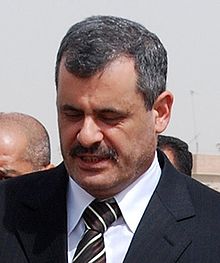
National Security Minister Waili (Wikipedia)
Recently released U.S. State Department cables document more attempts by Maliki to gain sway over the intelligence agencies. Just before the Iraqi elections in February 2010 Maliki fired 376 intelligence officers from the Defense and Interior Ministries, M2 Military Intelligence, and the National Intelligence Service. Maliki replaced almost all of them with Dawa members who had little to no experience in the field. One U.S. diplomat complained that the premier was harming Iraq’s intelligence community by kicking out experienced officers, and that the moves might be an attempt to strengthen his hand before the national voting. In one case, the prime minister requested the removal of 35 of M2 intelligence’s 132 staff for alleged ties to the Baath Party. The M2 director Alaa al-Ameri was able to cut the list to 22. Ameri subsequently complained to the Americans that almost all those on Maliki’s list were Sunnis, and that they included some of the most experienced intelligence hands in the department. The same thing happened at Interior’s National Information and Investigation Agency where the prime minister wanted 125 out for being Baathists. Maliki also appointed 47 Dawa members to M2, and another 58 to the National Information and Investigation Agency. All those placed in M2 had lived in Iran during the Saddam period, and Ameri thought that their diplomas were all faked as well. The U.S. military, intelligence, and diplomatic staff all complained to Maliki about this, but to no avail. In fact, Ameri was later fired too.
Iraq has a fragmented intelligence community. It is open to political and sectarian divisions, and both the United States and Iran have also played a role. The result is a group of agencies that don’t trust each other, especially the National Intelligence Service and the Ministry of National Security Affairs. Prime Minister Maliki has made the situation worse by his machinations to create his own intelligence bodies, and place Dawa members within each agency. These rivalries and differences prevent a steady flow of information from reaching Iraq’s security forces and leaders. It also hinders the collection of intelligence, as some groups are seen as representing a specific sect. The premier’s moves also set a dangerous example of politicizing the different arms of the community. The result is that Iraq’s six intelligence agencies reflect the dysfunction present in the rest of the country, none of which are likely to be solved any time soon.
SOURCES
Ackerman, Spencer, “Expect Sectarian Changeover With Iraqi Intelligence Jobs,” Washington Independent, 3/4/09
Banerjee, Neela and Jehl, Douglas, “Iraqi party helping U.S. reassemble Iran spy unit,” San Francisco Chronicle, 7/22/03
Bengali, Shashank, “WikiLeaks: Maliki filled Iraqi security services with Shiites,” McClatchy Newspapers, 12/3/10
Cordesman, Anthony, “Iraqi Force Development,” Center for Strategic and International Studies, July 2008
Fadel, Leila, “Cables show Iraq PM removed opposition from positions of power,” Washington Post, 12/4/10
Fisher, Max, “Iraq’s Security and Intelligence Gutted in Political Purges, New Cables Show,” Atlantic Monthly, 12/3/10
International Crisis Group, “Loose Ends: Iraq’s Security Forces Between U.S. Drawdown And Withdrawal,” 10/26/10
Jones, General James, “The Report of the Independent Commission on the Security Forces of Iraq,” Independent Commission on the Security Forces of Iraq, 9/6/07
Klein, Joe, “Is al-Qaeda on the Run in Iraq?” Time, 5/23/07
Reuters, “Iraqi Intelligence Chief Retired Just Before Major Blasts,” 8/23/09
Roads To Iraq, “Election update – various other news,” 9/29/09
- “Maliki wants to control the intelligence service,” 8/25/09
- “US-appointed head of the Iraqi Intelligence forced to retire,” 8/23/09
Sands, Phil, “Iraqi intelligence services accused of targeted killings,” The National, 9/21/10
Friday, December 3, 2010
Investigating Corruption Still Limited In Iraq
The Commission on Public Integrity, the main anti-corruption agency in the Iraqi government, released a report on its work for the first half of 2010. While the number of investigations, arrest warrants, and convictions continues to go up, the body still faces opposition from high officials, legal difficulties, and focuses upon low level incidents.
The Integrity Commission is dealing with more and more cases each year. In the first six months of 2010 the Commission received 3,901 allegations of corruption. They were also working on 4,004 claims and 3,921 other allegations. These investigations led to 2,360 arrest warrants, 52 of which were for director generals or above. One was also for the former Trade Minister Abdul al-Falah al-Sudani. Of those warrants, only 588 were actually carried out however, resulting in 762 people being detained, five of which were director generals or above. If that pace continued into the second half of the year the Commission would likely surpass its 2009 totals. In that year 3,710 arrest warrants were issued, leading to 1,719 people arrested.
For the half, the Commission ended up sending 1,226 cases to court, leading to 982 convictions worth approximately $284 million. 1 person got life in prison, 78 got more than 5 years in prison, 18 got 3-5 years, 89 got less than 3 years, and 16 had to pay fines. The most common crimes involved were embezzlement, 40 convictions, forged documents, 31 convictions, stealing public money, 27 convictions, and misusing public money, 20 convictions. That compares to all of 2009 when only 889 cases were sent to court, with 257 convictions involving 296 people.
Arrest Warrants Issued/Number Detained By Integrity Commission 2008-2010
2008: 630 warrants/714 detained
2009: 3,710 warrants/1,719 detained
1st Half 2010: 2,360 warrants/762 detained
Total Number of Cases Sent To Court By Integrity Commission 2004-2010
2004-2005: 26
2006: 296
2007: 140
2008: 382
2009: 889
1st Half 2010: 1,226
Total Number Of Convictions By Integrity Commission 2008-2010
2008: 97
2009: 257
1st Half 2010: 982
High officials and the Amnesty Law continued to interfere in the Commission’s work. Article 136(b) of the penal code allows ministers and other top official to stop investigations. That was used 95 times in the first six months of 2010 involving cases worth around $967,000. That was an increase from the previous year when it was only used in 28 cases involving 54 individuals. In 2008 136(b) was invoked 70 times, and 132 times in 2007. Of greater impact was the 2008 Amnesty Law, which was originally meant to help with reconciliation, but also absolves certain individuals from corruption. In 2008 1,552 cases had to be dropped because of the law, and 340 in 2009.
The Integrity Commission has also failed to bring any top administrator to justice since its creation in 2004. In 2010 the Commission lost its high profile case against the ex-Trade Minister Sudani, who had half of his charges dropped against him, which was subsequently upheld by a higher court in September. It’s believed that $4-$8 billion went missing while he was in office. There is still a second case pending against him, but it’s likely to end in a similar fashion.
Instead most of the Commission’s work is focused upon low level cases. In its 2009 end of the year review for example, it highlights some of its convictions. Those included an official at the Civil Bank of Iraq in Baghdad who was taking bribes, a forgery ring that involved officials at the Ministry of Education and Ministry of Higher Education, which was helping students into universities and government jobs who had not finished preparatory school, a woman at the University of Technology who was transferring students from foreign schools to Iraqi ones for bribes, an official at the Ministry of Culture who was demanding money to complete paperwork, and a ring that was forging papers to buy and sell cars illegally in Baghdad. In the 2009 and 2010 reports cases involving forged documents accounted for the second and first most convictions respectively. In the first half of 2010 the Commission issued 284 warrants for fake documents leading to 31 convictions. In 2009 there were 90 convictions involving forgeries. While these incidents document the day to day corruption that the average Iraqi has to face, none of them could be considered going to the core of the problem.
The Integrity Commission faces a daunting task carrying out its work in Iraq. The country has a deep culture of corruption that began under Saddam and has continued into the present day. Every sector of the economy and government appear to be involved. The fact that the leaders of the nation show no real support for the Commission’s effort, and instead actively interfere with their work, shows that it is fighting an uphill battle. Until that changes the Commission is likely to continue to work at the margins of corruption, while those with real power will be able to steal and abuse the system with impunity.
SOURCES
Commission of Integrity, “Annual report for 2008,” December 2009
- “CoI Key achievements and indicators from January 1, 2010 To June 30, 2010,” 7/28/10
Office of Investigations, “Commission of Integrity Annual Report for 2009,” Commission of Integrity, 2010
Special Inspector General for Iraq Reconstruction, “Quarterly Report to the United States Congress,” 10/30/10
Thursday, December 2, 2010
Iraq’s Lists Arguing Over Points System For Divvying Up Government Posts
As part of the negotiations over forming a new Iraqi government the major lists agreed to divide up the top posts using a points system. Earlier reports made that seem like a done deal, but it now turns out the parties are still working out how the system will work, and how the points will be used.
There have been two different versions of the point system reported. The first had each list taking the number of seats they won and multiplying it by two to arrive at their points. Under this system Iyad Allawi’s Iraqi National Movement (INM), which won the most seats, 91, would’ve had 182 points. Each office in the government was then given a numeric value with the premier, president and speaker of parliament at the top costing 15 points each. The second version was dividing the number of seats won by 2.44 to arrive at the points. That would give the National Movement 37 points. The president, prime minister, and speaker would cost ten points each, the top ministries foreign, defense, oil, and finance would be four points, the others being 2-3 points depending upon their importance, and ministries without portfolios would only be one point. In total there could be up to 39 ministries this time around, up from the current 37. According to some reports, the political parties have not agreed upon how this system will work yet.
Until then, the lists are arguing over how many points the major posts will cost to try to maneuver for the most ministries. The INM is arguing that the prime minister position should cost twice as many points as the speaker of parliament, which went to National Movement member Osama Nujafi, because it has more power. At the same time, the INM has proposed excluding the premier, president, and speaker from the point system all together, as well as the National Council for Strategic Policies, which Allawi has accepted to head. The Kurdish Coalition on the other hand, is claiming that the president and premier should not count for the same number of points because the latter is reverting to a largely ceremonial position. Jalal Talabani of the Kurdish Coalition has already been re-elected as the country’s president. All of these positions are meant to give the alliances more points to use on the ministries since the top three posts have already been elected or nominated. If they can exclude those offices or lower the costs for some of them, that will give the parties more points to spend on ministries which can be used to provide jobs and patronage to maintain and build popular support.
Prime Minister Nouri al-Maliki has until December 25, 2010 to put together a ruling coalition. He has promised to do so with time to spare. The jockeying over the points system doesn’t seem to make that likely. The ministries are being hotly contested, and the major lists want as many of them as they can possibly get. It’s already taken them eight months to just get to a power sharing agreement. It’s probably going to take some more hard fought talks over the coming weeks to work everything out, so a more realistic prediction for when a new Iraqi government is finally going to be created is early 2011.
SOURCES
AK News, Al-Sharq Al-Awsat, Nakhelnews, Al-Rafidayn, Al-Sabah, “Al-Maliki Nominated as Iraqi PM; Government Formation Underway,” MEMRI Blog, 11/29/10
Alsumaria, “Iraqi Presidencies exempted from points mechanism,” 11/30/10
Ibrahim, Haider, “Allawi accepts leadership of National Council for Strategic Policies,” AK News, 11/29/10
Al-Jaff, Wissam, “KBC: We refuse calculating equal points for Talabani and al-Maliki,” AK News, 11/29/10
Uragency, “Close Al-Maliki Aide: No Decision on Assignment of Ministries,” MEMRI Blog, 11/17/10
Arts, Entertainment, And Play In Iraq
The New York Times' At War blog has another photo essay of daily life in Iraq. It shows Iraqis going out, playing sports, enjoying a movie, catching a bite, and an art show with music.


SOURCES
Farrell, Stephen and Oghanna, Ayman, "Iraq: Moments of release," At war Blog, New York Times, 11/28/10

(New York Times)

(New York Times)

(New York Times)

(New York Times)

(New York Times)

(New York Times)

(New York Times)
SOURCES
Farrell, Stephen and Oghanna, Ayman, "Iraq: Moments of release," At war Blog, New York Times, 11/28/10
Wednesday, December 1, 2010
Did The U.S. Do A Good Job Training The Iraqi Police?
By at least 2020 the Iraqi government plans on transferring internal security of the country from the army and Defense Ministry to the Interior Ministry. That poses the question of whether the Iraqi police are up to the task. In October 2010 the Special Inspector General for Iraqi Reconstruction (SIGIR) conducted an audit of the American police training effort. It found that the U.S. had always focused upon the number of officers it could produce rather than whether they were competent or not. The mission also lacked continuity, coordination, long-term planning, and effective measures of success. There’s no telling whether the police will be ready then by 2020.
Before the U.S. invaded Iraq in 2003, it didn’t have realistic plans for the Iraqi police. The Pentagon assumed that the government would be up and running the day after the war ended, and that the police would be back on their job as well. The State Department, with assistance from the Justice Department, was originally tasked with responsibility for the police. State was supposed to set up a training mission to teach the Interior Ministry’s forces about democratic practices and modern investigative work involving 5,000 international police. The Bush Administration however, didn’t like the idea because it didn’t want responsibility for running the country after the war. The CIA also offered an assessment saying that the Iraqi police were good, which allowed some officials to argue that they did not need U.S. assistance. Instead the U.S. came up with a plan to assess the Iraqi police and justice system using 1,000 private contracts and 500 foreign police if necessary. The United States Institute of Peace warned the Pentagon’s Defense Policy Board about the shortcomings of this plan right before the war, but to no avail.
Immediately after the invasion, the American assumptions about Iraq fell apart. The police ended up abandoning their posts. Within a few weeks some officers wandered back to work. Time magazine for example, reported that around 50% of the police in Baghdad were back on duty by mid-May. A State Department team arrived in Iraq that month with just 34 members. On May 30, it issued a report that found the police to be corrupt, unprofessional, and untrustworthy. It recommended 6,663 advisers be sent in immediately, which was rejected by Washington because it lacked the money and personnel. Before the war State had estimated that it would cost $1 billion to just send in 1,500 advisers, but in May it only had $25 million budgeted for the task. Instead only 150 police experts from a contractor were hired. Jay Garner, the first U.S. administrator of Iraq shared Washington’s skepticism of the need for police aid as well.
The deteriorating security situation in Iraq quickly changed people’s opinions. In April the Coalition Provisional Authority (CPA) was put together and pushed for the hiring of thousands more police as quickly as possible. In mid-May, former New York City police commissioner Bernard Kerik was hired, he estimated that Iraq needed 33,000-35,000 new officers, which would take two years. By the fall, the CPA had set up a $1.2 billion program in neighboring Jordan to train 35,000 recruits, and similar efforts within the country. Classes only lasted two-weeks however, and then officers were sent out to work. By October the United States Institute of Peace issued a harsh criticism of the U.S. effort, saying that there was no real commitment to rebuild the police, and that six months had been wasted, which resulted in the deterioration of security in the country. Others said that the force suffered from limited training, lacked equipment, were infiltrated by the insurgency, and were being rushed into the field before they were ready.
Because of the failure of these early efforts, the U.S. military was given control of the Iraqi police in May 2004. The change in command, did not fix the situation. The U.S. Central Command (CENTCOM) shifted focus from the State Department’s long-term plans to build a democratic police force, to pumping out as many officers as quickly as possible to fight the insurgency. The military’s short-term thinking also didn’t coordinate local training with national goals. U.S. Army and Marine units generally did what they wanted with the police, and sometimes gave it no priority because of other concerns. What they did had nothing to do with what was going on with the police academies the U.S. set up, the Interior Ministry’s plans, or the Jordanian effort. Also, every time an American unit left or a new American general took over Iraq, a completely new agenda was started with no connection to the previous one. That meant announcements like the 2006 “Year of the Police” were meaningless because there were no actual plans, standardized program, or communication or cooperation at different levels to carry it out. Instead, every year from 2004-2010 the main goal was to put as many police as possible out in the field, and from 2008 on to make the Interior Ministry more independent.
The Special Inspector General (SIGIR) also found that there was no reliable information on the capabilities of the Iraqi police. That was because the U.S. program focused upon numbers rather than competence. In 2010 the SIGIR found that there was even less information available about the Iraqi police than 2009 because the U.S. stopped assessing them as part of its withdrawal. The last report available came from February 2010. It said that the Interior Ministry’s forces had minimum essential capabilities to protect the population, fight crime, investigate crime scenes, counter explosives, protect infrastructure, and carry out counterinsurgency operations in less than three of Iraq’s eighteen provinces. The Border Police were only capable of securing the country’s frontiers in one to two provinces.
Now that the U.S. is withdrawing its military, it plans on having the State Department once again take over advising and assisting the Interior Ministry. State is supposed to focus upon management, administration, and specialized skills, run three training facilities, and coordinate with Iraq’s academies and provincial headquarters. All of this is to be done with only 200 personnel, 150 less than what State wanted because of budget constraints in Washington. The U.S. hopes that England, France, Denmark, Italy, the European Commission, the United Nations, and NATO will also lend a hand. The Pentagon has warned that the Interior Ministry has serious gaps in funding, command, and logistics, and is afraid if those aren’t partially solved by December 2011, they may never be fixed. Some analysts are also worried that the State Department will lack the people to effectively aid the Iraqi police.
The SIGIR audit is a damning indictment of the U.S. effort to rebuild the Iraqi police. The insurgency and civil war short-circuited the original American plans for the Interior Ministry, which were unrealistic to begin with. When the U.S. military took over, it simply wanted as many police in uniform as possible, and forced many out in the field before they were ready. This led to the disintegration of many units, and stations being overrun by insurgents and militiamen. The State Department is now supposed to take over the training mission, but will largely focus upon the bureaucracy of the Interior Ministry rather than the average policeman. The last official U.S. report on the Ministry’s forces from February 2010 doesn’t seem to paint them as being very competent and able to secure the country, let alone carry out basic police duties. All of this history makes it hard to think of the $7.3 billion spent on the police in the last seven years by the Americans as a wise use of funds.
SOURCES
Banerjee, Neela, “Raid prompts doubts about Iraqi security,” San Francisco Chronicle, 2/16/04
Cordesman, Anthony, “The Current Military Situation in Iraq,” Center for Strategic and International Studies, 11/14/03
Eisenberg, Daniel, “Can Anyone Govern This Place?” Time, 5/26/03
Fineman, Mark, Wright, Robin, and McManus, Doyle, “Preparing for War, Stumbling to Peace,” Los Angeles Times, 7/18/03
Gordon, Michael, “For Training Iraq’s Police, the Main Problem Was Time,” New York Times, 10/21/04
PBS Frontline, “Interview Gen. Jay Garner,” Truth, War and Consequences, 10/9/03
- “Interview Robert Perito,” Truth, War and Consequences, 10/9/03
Shanker, Thom, “U.S. to keep troop levels in Iraq unchanged,” San Francisco Chronicle, 7/10/03
Special Inspector General for Iraq Reconstruction, “Iraqi Security Forces: Police Training Program Developed Sizeable Force, But Capabilities Are Unknown,” 10/25/10
- “Quarterly Report to the United States Congress,” 10/30/10
Tyler, Patrick and Bonner, Raymond, “Iraqis dubious about U.S. contracts,” San Francisco Chronicle, 10/4/03
Walt, Vivienne, “Bombing at Baghdad police compound,” San Francisco Chronicle, 9/3/03
Subscribe to:
Posts (Atom)
This Day In Iraqi History - Nov 14 British army ordered to seize Basra vilayet WWI
1914 Sheikh of Islam called for jihad against British and French during WWI Call was repeated in all Sunni mosques in Mosul, Baghdad a...

-
 Napoleoni, Loretta, Insurgent Iraq, Al Zarqawi and the New Generation , New York: Seven Stories Press, 2005 In Insurgent Iraq autho...
-
 Dr. Michael Izady of Columbia’s School of International and Public Affairs recently gave an interview to the Swiss-based International Relat...
-
 Professor Nadje Al-Ali is a professor of gender studies at SOAS, University of London. She has authored several books and articles...