Tuesday, July 14, 2009

How Many Iraqi Refugees Have Returned?


In June 2009 the United Nations' High Commissioner for Refugees (UNHCR) released its latest report on the return of Iraqi refugees and internally displaced. The numbers show that the rate of return has gone up and down since the 2003 invasion, largely connected to the security situation within Iraq. Of Iraq's estimated 4.6 million refugees, roughly a third have returned so far. Many are going back to areas where their group is predominate, changing the demographics of the country. If current trends continue, fewer Iraqis will come back in 2009 compared to 2008, which poses the questions of what will be the plight of those that don't go back. 

Iraq has faced three waves of displacement in recent history. First Saddam used the removal of populations against his domestic Shiite and Kurdish opponents. Over 1 million Iraqis lost their homes before 2003 as a result. The U.S. invasion and the subsequent fighting led to another 200,000 displaced from 2003-2005. The bombing of the Shiite shrine in Samarra in 2006 led to over 1.6 million more. Another two million Iraqis have also become refugees during this time.

The UNHCR numbers show that immediately after the U.S. invasion in 2003 Iraqis began coming home. In 2003 55,249 refugees came back, but no displaced did. 2004 saw the largest total returns to date with 291,997 displaced and refugees making the trip. With the insurgency and the sectarian war taking off the number of returns slowed down by 2007. In 2005 154,155 came back, followed by 170,235 in 2006, but then only 81,420 in 2007. With the improved security, returns jumped back up in 2008. Most of those, 195,890, have been internally displaced compared to only 25,370 refugees. In the first five months of 2009 this trend has continued, 64,450 displaced and 18,630 refugees, but with fewer people overall, 83,080 up to May 2009 compared to 221,260 total in 2008. Overall, 61% of those coming back since the invasion have been displaced Iraqis.

The UNHCR counts 1,057,576 as a rough estimate of the total number of returns since 2003. That would mean about 37% of Iraq's displaced and refugees have gone back. 501,581 came back before the Samarra bombing in 2006, 47.4% of the total, while 555,995, 52.6%, have returned afterwards.

Iraqi Returns
Time Displaced – Individuals Refugees – Individuals Total %
2003
0
55,249
55,429
5%
2004
98,000
193,997
291,997
28%
2005
98,000
56,155
154,155
15%
2006
150,000
20,235
170,235
16%
2007
36,000
45,420
81,420
8%
2008
195,890
25,370
221,260
21%
Jan. 09
6,390
1,130
7,520

Feb. 09
15,810
2,970
18,780

March 09
20,690
5,850
26,540

April 09
11,020
3,890
14,910

May 09
10,540
4,790
15,330

Total 09
64,450
18,630
83,080
8%
Total
642,340
61%
415,236
39%
1,057,576
100%

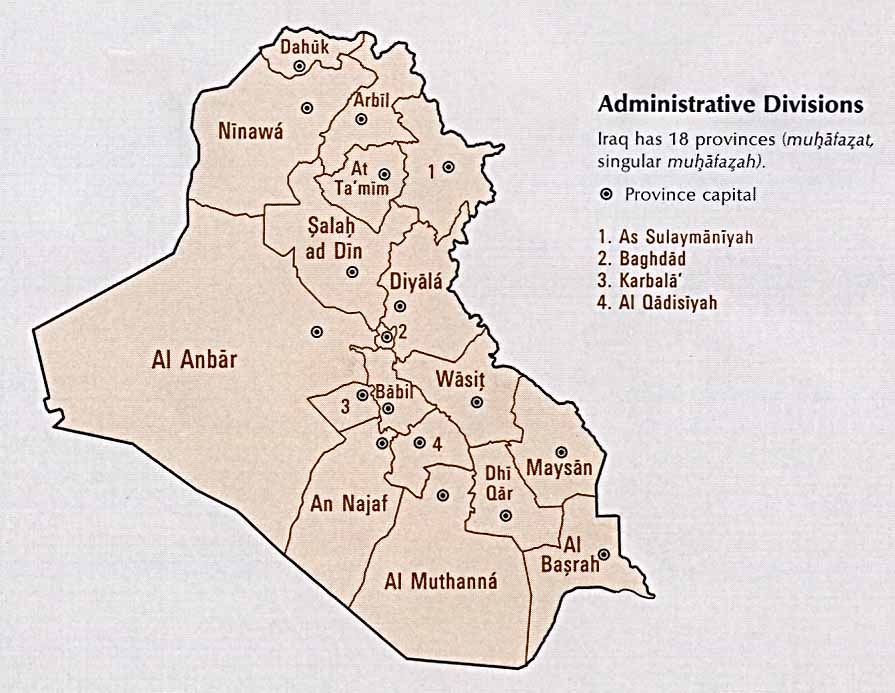
Most of the fighting and ethnic cleansing during the sectarian war occurred in Baghdad and Diyala with its mixed Sunni-Shiite populations. Those two provinces have seen the largest number of people coming back in 2009. Baghdad saw 51% of returns and Diyala 34%. The next province was Ninewa with only 3%. When broken down between refugees and displaced, however, a new pattern emerges. Baghdad still received the most refugees coming back with 55%, but Najaf was second with 11%, followed by Diyala with 7% and Karbala with 6%. The displaced have mostly gone back to Baghdad, 51% and Diyala 42%.

Refugees and Displaced Returns By Province – Individuals 2009
Province Jan. 09Feb. 09 March 09 April 09 May 09 Total 09%
Anbar
0
0
40
20
340
400
0%
Babil
210
190
460
400
290
1,550
2%
Baghdad
2,000
7,550
12,670
10,230
10,330
42,780
51%
Basra
340
130
450
120
80
1,120
1%
Dohuk
0
0
40
10
10
60
0%
Dhi Qar
20
30
180
100
20
350
0%
Diyala
3,420
9,040
10,120
2,650
2,980
28,210
34%
Irbil
20
20
50
0
60
150
0%
Karbala
90
80
240
280
380
1,070
1%
Maysan
70
40
70
100
80
360
0%
Muthanna
20
0
110
30
10
170
0%
Najaf
370
510
120
580
380
1,960
2%
Ninewa
590
680
1,150
30
30
2,480
3%
Qadisiyah
20
40
280
90
10
440
1%
Salahaddin
10
40
40
80
90
260
0%
Sulaymaniya
0
0
0
0
030
30
0%
Tamim
0
180
230
160
100
670
1%
Wasit
340
250
290
30
110
1,020
1%
TOTAL
7,520
18,780
26,540
14,910
15,330
83,080
100%

9%
23%
32%
18%
18%
100%


Refugee Returns By Province – Individuals 2009
ProvinceJan. 09 Feb. 09 March 09 April 09 May 09 Total 09 %
Anbar
0
0
0
0
0
0
0%
Babil
110
160
250
290
120
930
5%
Baghdad
0
1,340
3,330
2,140
3,420
10,230
55%
Basra
220
90
140
90
50
590
3%
Dohuk
0
0
40
10
10
60
0%
Dhi Qar
10
30
180
100
20
340
2%
Diyala
120
400
760
70
0
1,350
7%
Irbil
20
20
30
0
50
120
1%
Karbala
90
80
240
270
360
1,040
6%
Maysan
60
30
60
90
60
300
2%
Muthanna
20
0
110
30
10
170
1%
Najaf
370
510
120
580
380
1,960
11%
Ninewa
0
0
0
0
20
20
0%
Qadisiyah
20
40
280
90
10
440
2%
Salahaddin
0
20
20
0
40
80
0%
Sulaymaniya
0
0
0
0
30
30
0%
Tamim
0
180
220
130
100
630
3%
Wasit
90
70
70
0
110
340
2%
TOTAL
1,130
2,970
5,850
3,890
4,790
18,630
100%

6%
16%
31%
21%
26%
100%


Displaced Returns By Province – Individuals 2009
Province Jan. 09Feb. 09 March 09 April 09 May 09 Total 09 %
Anbar
0
0
40
20
340
400
1%
Babil
100
30
210
110
170
620
1%
Baghdad
2,000
6,210
9,340
8,090
6,910
32,550
51%
Basra
120
40
310
30
30
530
1%
Dohuk
0
0
0
0
0
0
0%
Dhi Qar
10
0
0
0
0
10
0%
Diyala
3,300
8,640
9,360
2,580
2,980
26,860
42%
Irbil
0
0
020
0
10
30
0%
Karbala
0
0
0
10
20
30
0%
Maysan
10
10
10
10
20
60
0%
Muthanna
0
0
0
0
0
0
0%
Najaf
0
0
0
0
0
0
0%
Ninewa
590
680
1,150
30
10
2,460
4%
Qadisiyah
0
0
0
0
0
0
0%
Salahaddin
10
20
20
80
50
180
0%
Sulaymaniya
0
0
0
0
0
0
0%
Tamim
0
0
10
30
0
40
0%
Wasit
250
180
220
30
0
680
1%
TOTAL
6,390
15,810
20,690
11,020
10,540
64,450
100%

10%
24%
32%
17%
16%
100%


Within Baghdad, returning Iraqis have been unevenly distributed. The central district of Karkh has seen the most returns with 23,630. After that the western district of Kadamiya 5,450, and the northern district of Adhamiya, 5,320, were next. All three were battlefields in the sectarian war. Adhamiya was a mixed Sunni-Shiite area with a Sunni majority in northwestern Baghdad next to Sadr City. Karkh was in the middle with a largely mixed Sunni-Shiite population, and Kadamiya was a Shiite area in mostly Sunni western Baghdad. The Mahdi Army for example, tried to expand into all three areas. Abu Ghraib in contrast, which is located in the west by the Baghdad International Airport, just outside of the capital, was mostly known for insurgent activity, and has only had 330 returns this year as a result. On the one hand it's good to see that the areas in Baghdad province that had the most intense fighting are seeing the largest returns, at the same time most reports say that families are largely returning to areas where their sect is predominate adding to the segregation of the area.

Iraqis have been returning to the country since 2003. The numbers coming back have gone up and down depending upon the security situation. 2004 saw the largest amount of people coming back, but most of the conversation today is about those that lost their homes during the sectarian fighting after the 2006 Samarra bombing. 2008 saw a huge increase in returns, but if this year's trend continues, fewer will come back in 2009. There are two major concerns about this process. First, over three and a half million Iraqis are still displaced even with violence dramatically down. Some are worried that these Iraqis will become permanent refugees similar to the Palestinians. Second, many of central and northern Iraq's cities use to be made up of mixed neighborhoods. The sectarian war created segregated areas, which are now being solidified by the pattern of returns. Both of these will have dramatic effects upon Iraq's society if they are continued.

SOURCES

Bigio, Jamille and Scott, Jen, "Internal Displacement in Iraq: The Process of Working Toward Durable Solutions," Brookings Institution and University of Bern, June 2009

International Crisis Group, "Iraq's Civil War, The Sadrists And The Surge," 2/7/08

UNHCR, "UNHCR Iraq Operation, Monthly Statistical Update on Return – May 2009," June 2009

Monday, July 13, 2009

Overview of Iraq’s Tribes

Much of the commentary about Iraq is driven by U.S. experiences, which are not always the reality in Iraq. When the sectarian war took off in 2006 for example, much of the writing about the country was focused upon the Sunni-Shiite divide. A common argument was that these two interpretations of Islam had always been in conflict, and could not coexist in Iraq. Later, when the U.S. began working with the tribes in Anbar, which became known as the Awakening, a new line of thinking opened up claiming that Iraq was at heart a tribal society. This ignored the fact that many of the country’s largest tribes were a mix of Sunnis and Shiites. If the first argument held true, than the sectarian fighting should’ve destroyed many of Iraq’s tribes. Neither was completely true nor false. A quick review of Iraq’s tribal history shows that they are but one form of social organization and identity within the country amongst others. Their influence is usually directly related to the power of the state.

Many of Iraq’s tribes migrated there from the Arabian peninsula. Iraq’s tribes are divided into sub-tribes, clans, and their most basic unit, the extended family. Sheikhs are leaders within these communities. They control local economies, settle disputes, etc. The problem is there are so many it’s hard to determine which ones have real standing. About 75% of Iraq’s 26 million people belong to a tribe. There were originally nine tribes in Iraq, the Mutafiz, Zubayd, Dulaym, Ubayd, Khazal, Bani Lam, Al Bu Muhammad, Rabia, and Kab. By the 1800s there were several new groups included the Shammar, Anaza, Bani Tamim, and Zafire. Many of these groups have divided over the years leading to about 150 different tribes in the country, and around 2,000 clans today. The larger tribes are usually a mix of Sunnis and Shiites.

The power and role of Iraq’s tribes have gone up and down depending upon the rulers of the country. When the Ottomans originally ruled Iraq they had very loose control over the area, so the tribes held the real authority. By the mid-19th Century however, the Ottomans began encouraging people to give up their semi-nomadic lifestyle by settling in towns and cities, and instituted land reform, both of which diluted the standing of the tribes. That changed when the British took over and created Iraq in the wake of World War I. They turned to sheikhs as local partners to institute a form of indirect rule in the country. Many tribes became connected to specific villages at this time based upon extended families. Beginning in the 1920s when the monarchy tried to establish itself that again withered the power of the tribes. In 1968 when the Baathists took power they had a mixed policy towards the tribes. On the one hand the party wanted to modernize the state, and banned tribal names, encouraged migration from rural areas to the cities, again instituted land reform, which broke up the traditional structures many tribes relied upon, and emphasized Iraqi nationalism over other identities. At the same time, top Baathist leaders privileged their own personal kinsmen and gave them top positions in the new government.

Saddam ended up turning to the country’s tribes in the 1980s because of the wars and uprisings he faced, which eventually came back on him. First he looked to the tribes to organize soldiers to fight in the Iran-Iraq war. It was during this time that the Dulaym tribe in Anbar for example, gained privileged status from the government. After the 1991 Gulf War, Saddam relied even more upon the tribes to control the country after the Kurdish and Shiite uprisings. He gave tribes more autonomy and services, and in return, they agreed to provide security in their areas. He also played the tribal leaders off against each other, and created new tribes in a divide and rule policy. The sheikhs’ authority then was dependent upon the amount of support they received from the state. At the same time, their growing power was a sign that the Iraqi state was crumbling from the wars and sanctions. By the 1990s in fact, there were at least two tribal coup attempts against Saddam.

Immediately after the invasion in 2003, the U.S. had a contradictory attitude towards Iraq’s tribes. On the one hand, Paul Bremer wanted to get rid of the old order, which included the tribes. At the same time, in an attempt to create a sectarian and ethnically balanced Iraqi Governing Council and interim Iraqi government the Coalition Provisional Authority selected a few sheikhs to represent the Sunnis. Ghazi Ajil al-Taware of the Shammar tribe for example, was appointed Iraq’s interim president in 2004. The U.S. military also reached out to selected tribes to provide security, but many of those efforts proved futile. Many of the leaders the U.S. worked with proved largely powerless, unpopular, or were playing both sides in the conflict.

In the provinces, the overthrow of Saddam not only led to resistance, but the collapse of the Iraqi state. The situation was made worse when the Sunnis decided to boycott the January 2005 elections. Only 2% of Anbar for example, participated. The Iraqi Islamic Party came to power despite lacking any mandate or legitimacy. The provincial government only operated where U.S. forces could protect them, which was few and far between. Into this vacuum stepped in the insurgency and Al Qaeda in Iraq. Playing upon a sense of loss by the Sunni community, Iraqi nationalism, anti-Americanism, and cash, the militants recruited many young men to fight.

At first the tribes of Anbar aligned themselves with the insurgents, but then came to see Al Qaeda in Iraq as a threat. At first both had a common enemy in the Americans, but then a few tribes felt that the Islamists were attempting to take control of Anbar for themselves. This eventually led to the Anbar Awakening, which aligned itself with the United States. The Americans in turn gave them jobs in the local security forces, and directed reconstruction money to them. This gave rise to a new generation of sheikhs who replaced the old ones. The U.S. in fact, became the new patrons of the tribal leaders, playing a similar role to what Saddam did.

In the south, many tribes were co-opted by the Supreme Islamic Iraqi Council (SIIC) and of Shiite parties. When the U.S. tried to replicate the Awakening with Shiite tribes during the Surge they met stiff resistance by the Supreme Council who controlled many of the provincial governments in the region, and Prime Minister Nouri al-Maliki. Both considered the tribes their constituents. Maliki began winning over many from the Supreme Council in 2008 with his Tribal Support Councils. Like Saddam and the Americans, the Prime Minister created a patronage system to keep these tribes under his control.

The majority of Iraqis claim membership in tribes, but that is not their only identity. Urbanism, Islam, and Iraqi nationalism are other factors that shape Iraqis. Throughout the country’s history the tribes have risen and fallen in relation to the power of the central authorities. During the early Ottoman period, British rule, and after the U.S. invasion, the government was weak and the tribes were strong, while in the other periods their power was diluted. Today, the tribes have found a new space in Iraq, but it appears still conditional. In Anbar the Awakening tribes are trying to form themselves into a new political force, but in southern Iraq many have been co-opted by Prime Minister Maliki. Again, it is the strength of the government that seems to determine the influence of the tribes.

SOURCES

Burns, John and Glanz, James, “Iraqi Shiites Win, but Margin Is less Than Projection,” New York Times, 2/14/05

Byman, Daniel, “An Autopsy of the Iraq Debacle: Policy Failure or Bridge Too Far?” Security Studies, October 2008

Eisenstadt, Lieutenant Colonel Michael, “Iraq Tribal engagement Lessons Learned,” Military Review, September-October 2007

Gordon, Michael, “The Last Battle,” New York Times, 8/3/08

Hassan, Hussein, “Iraq: Tribal Structure, Social, and Political Activities,” Congressional Research Service, 4/7/08

International Crisis Group, “Iraq After The Surge I: The New Sunni Landscape,” 4/30/08

Long, Austin, “The Anbar Awakening,” Survival, April 2008

McCary, John, “The Anbar Awakening: An Alliance of Incentives,” Washington Quarterly, January 2009

Otterman, Sharon, “IRAQ: The Role of Tribes,” Council on Foreign Relations, 11/14/03

Smith, Major Neil and MacFarland, Colonel Sean, “Anbar Awakens: The Tipping Point,” Military Review, March-April 2008

Sunday, July 12, 2009

The Problems With Iraq’s Electricity Network

Iraq’s electricity production is far above what it was before the 2003 invasion, yet the lack of power is one of the main complaints average Iraqis have. The problem is two fold. First, after the invasion, those with money went on a buying spree purchasing air conditioners, refrigerators, etc., which greatly increased demand above what it was before when the country was under international sanctions. Second, the U.S. and Iraq have invested billions into the power system, yet much of the equipment can’t be maintained or supplied. Together this has caused continuing problems providing electricity to Iraq’s citizens.

In the first quarter of 2009 Iraq reached a new post-invasion high in electrical output. From January to March 2009 Iraq averaged 118,485 megawatts. With the importation of 13,021 megawatts from Iran and Turkey, total supply reached 131,506 megawatts. This was the third straight quarter that production was up, and was a 10% increase from the last three months of 2008. That averaged out to about 6,300 megawatts per day, which was far about the 4,075 megawatts supplied under Saddam in 2003 before the invasion, and the approximately 4,800 megawatts available in 2008.

Even with that increase the Special Inspector General for Iraq Reconstruction (SIGIR) estimates that the government only meets about 73% of demand in 2009. An Oxfarm International survey of Iraqi women in the second half of 2008 found that they felt access to power was worse in that year compared to 2006. A January 2009 survey also reported that 43% of respondents only got electricity half of the time. That was a 12% decrease from 2007.

Because Iraqis cannot rely upon the public power network, many turn to private generators to make up the difference. It’s unknown how much is produced this way, but it’s believed to be about 2,000-3,000 megawatts per day. 75% of respondents in the Oxfam survey said they used private generators. If families don’t own their own generator there are many individuals and businesses that offer the service for a fee. SIGIR visited the Haditha Primary Healthcare Center in Anbar for example, and found that it only got 5 hours of electricity from the government, and had to rely upon its own generator for the rest.

One reason that the municipal supply is inadequate is that the country is not generating as much power as it should. Iraq’s power plants operate at less than half of their feasible capacity. This is caused by a number of factors. First, Iraqis have problems operating, maintaining, and sustaining the plants installed by the Americans. Before the U.S. invasion, Iraq relied largely upon foreigners to operate their electrical system. These technicians have mostly left, and Iraq has a shortage of trained personnel because of the war. That means plants are often broken, under repair, or under producing. Another problem is that when the U.S. began its reconstruction effort in Iraq it installed western style turbines, which rely upon natural gas. Iraq has plenty of that resource, but it has never been developed. That means many of these turbines have to run on fuel instead, which burns out the equipment, causing more technical and maintenance difficulties. Iraq has also had severe fuel shortages to run the plants. To add to these difficulties, the Electricity Ministry has not gotten the money that it has requested, and has not been able to spend most of its budget anyway. In 2008 the Ministry got $1.389 billion, $1.3 billion of which was for its capital expenditures to invest in equipment. It only spent 12% of its money however. In 2009, because of the country’s budget problems, the Ministry is getting $1.08 billion for its capital budget, when it asked for $7 billion. The Electricity Minister worries that it won’t be able to keep up with its production this year as a result. This is especially true because the Ministry has bought new turbines, but not the equipment and contracted for the work to connect them to the distribution system.

With security improving in Iraq, the delivery of basic services is becoming a larger issue, and electricity is at the top of the list. Politicians ran on it during the January 2009 provincial elections, and it could be an issue again in the January 2010 provincial balloting. Both the American and Iraqi governments have invested billions into the electricity system, and production is far above what it was in the Saddam years, yet it is still not sufficient to meet demand. Kirkuk is reportedly the only city in the country that has 24-hour power, and that was just achieved in June 2009, six years after the U.S. invasion. With budget, maintenance, fuel, and personnel issues, this could still be a problem six years from now.

SOURCES

Al-Khalid, Diaa, “twenty four hours of electricity in kirkuk!” Niqash, 6/30/09

Miller, T. Christian, “U.S. Missteps Leave Iraqis in the Dark,” Los Angeles Times, 12/25/05

Radio Free Europe/Radio Liberty, “Iraqi Official Says Power Outages To Ease,” 5/6/09

Special Inspector General For Iraq Reconstruction, “Hard Lessons,” 1/22/09
- “Quarterly Report to the United States Congress,” 4/30/09

Friday, July 10, 2009

1st Oil Bidding Round Flops In Iraq

On June 29, 2009 the Iraqi Oil Ministry offered up six oil fields, and two natural gas fields for long-term deals with international companies. The process was one of the most open and transparent in recent history as it was broadcast live on Iraqi television. 35 companies were pre-approved to participate, but only 22 placed bids. The Oil Ministry was offering 20-year technical service agreements. The companies would be paid a flat fee to invest technology, but would also be paid a fee for each extra barrel of oil produced. The winning companies were also to pay a hefty signing bonus in the form of multi-million dollar loans. Because there were so many objections to the deals, the Oil Ministry claimed that Iraq would earn $1.7 trillion over 20-years from the contracts, while the companies would only be paid $16 billion. Iraq would also get up to $2.6 billion in loans from the signing bonuses.

In the end the process turned out to be a flop. The oil companies first offered an opening bid for how much they expected to be paid for each barrel of increased output, and then the government reveled their price. The two sides were then to negotiate and agree upon an amount. In the end, only one consortium of British Petroleum (BP) and China’s CNPC won a bid for the South Rumaila field in Basra. BP-CNPC wanted $3.99 per extra barrel, while the government asked for $2. BP-CNPC ended up agreeing to the Oil Ministry’s price. That was because it was the smallest gap between the companies’ demands and the Ministry’s. In comparison, the government was willing to pay $8.50 for extra production from the Akkas gas field in Anbar, while the foreign businesses wanted $38. One natural gas field in Diyala didn’t even receive a bid.

It was apparent that Baghdad had unrealistic expectations about their offers, something Anthony Cordesman from the Center for Strategic and International Studies warned about after a recent trip to Iraq. He wrote that Iraqi officials were just thinking about the possible profits, and not about workable business models that international companies would accept. The first round of bidding seems to have proven his point.

This event was supposed to be a defining moment for Iraq’s oil industry. The country relies upon petroleum for almost all of its revenue, and with the drop in oil prices and budget deficit, the Oil Ministry was promising that this first round of bidding would open the country up to the foreign know how necessary to boost production, while protecting the nation’s resources. In the end it turned out to be a fiasco. Only one deal was agreed upon, and the Oil Ministry proved that it was out of touch with economic realities. With oil prices down, the companies, not the oil producing nations have the upper hand, as the former are desperate for deals, which gives the corporations more leeway to negotiate. This could’ve been expected as the Oil Minister’s plans have been ad hoc at best, and he’s scrapped earlier ideas to increase output in 2008. Iraq’s oil wealth will continue to be underdeveloped and mismanaged with this continued leadership, robbing the country of the money that it so desperately needs after years of wars and international sanctions.

Oil And Natural Gas Fields And Bids

South Rumaila Oil Field – Basra Province
Reserves: 7.3 billion barrels
Bidders:
1. British Petroleum and China’s CNPC
2. Exxon-Mobile and Malaysia’s Petronas
Initial Bid: BP-CNPC $3.99 per extra barrel
Oil Ministry’s Bid: $2 per extra barrel
Winning Bid: $2 per extra barrel by BP-CNPC

West Qurna Oil Field – Basra Province
Reserves: 7.4 billion barrels
Bidders:
1. Exxon-Mobile and Royal Dutch Shell
2. Spain’s Reposal with Denmark’s Maersk Oil and Gas and Norway’s Statoil Hydro
3. Russia’s Lukoi
4. France’s Total
5. China’s CNPC
Initial Bid: Exxon-Mobile and Royal Dutch Shell $4 per extra barrel
Oil Ministry’s Bid: $1 per extra barrel
No winners

Kirkuk Oil Field – Tamim Province
Reserves: 6.5 billion barrels
Bidders: Royal Dutch Shell and China’s Sinopec and Turkish Petroleum Corp
Initial Bid: $7.89 per extra barrel
Oil Ministry’s Bid: $2 per extra barrel
No winners

Zubayr Oil Field – Basra Province
Reserves: 4 billion barrels
Bidders:
1. Italy’s Eni, China’s Sinopec, and South Korea’s Occidental and Korean Gas
2. India’s ONGC, Gazprom Russia, and Turkish Petroleum Corp
3. Exxon-Mobile, Royal Dutch Shell, and Petronas
4. British Petroleum and China’s CNPC
Initial Bid: Eni, Sinopec, Occidental and Korean Gas $4.80 per extra barrel
Oil Ministry’s Bid: Unknown
No winners

Maysan Group Oil Field – Maysan Province
Reserves: 2.5 billion barrels
Bidders: China’s CNOOC and Sinochem
Initial Bid: $21.40 per extra barrel
Oil Ministry’s Bid: $2.30 per extra barrel
Deal has been referred to Iraqi cabinet

Bai Hassan Oil Field – Maysan Province
Reserves: 2.3 billion barrels
Bidders: Conoco Phillips, China’s Sinopec and CNOOC
Initial Bid: $26.70 per extra barrel
Oil Ministry’s Bid: $4 per extra barrel
Deal has been referred to Iraqi cabinet

Akkas Natural Gas Field – Anbar Province
Reserves: 4,000-4,500 billion cubic feet
Bidders: Italy’s Edison, Malaysia’s Petronas, China’s CNPC, Turkey’s TPAO,
And Korea’s Gas Corp
Initial Bid: $38 for extra production
Oil Ministry’s Bid: $8.50 for extra production
No winners

Mansuriyah Natural Gas Field – Diyala Province
Reserves: 3,100 billion cubic feet
Bidders: None

SOURCES

Aswat al-Iraq, “Plan to develop Bai Hassan, Kirkuk oil fields,” 7/4/09

Chmaytelli, Maher and DiPaola, Anthony, “Iraq Says May Earn 100 Times More Than Oil Companies (Update1),” Bloomberg, 6/23/09

Chon, Gina, “Big Oil Ready for Big Gamble in Iraq,” Wall Street Journal, 6/24/09
- “Foreign Firms Bid for Iraqi Oil Licenses,” Wall Street Journal, 6/30/09
- “Oil Companies Reject Iraq’s Contract Terms,” Wall Street Journal, 7/1/09

Cordesman, Anthony, “Observations From a Visit to Iraq,” 6/15/09

Dow Jones, “UPDATE:Iraq Parliament Panel: Rumalia Deal Needs Lawmakers’ OK,” 7/3/09

Hafidh, Hassan, “FOCUS: Oil Majors Line Up For Iraq’s First Bid Round,” Dow Jones, 6/29/09

Hoyos, Carola, Warrell, Helen, and Bernard, Steve, “Crude Competition,” Financial Times, 6/30/09

Al Jazeera, “Foreign oil firms reject Iraq terms,” 6/30/09

Lando, Ben, “Oil bid debrief,” Iraq Oil Report, 7/8/09

Lando, Ben and Latif, Nizar, “One oil field awarded, many questions remain,” Iraq Oil Report, 6/30/09

Londono, Ernesto, Ibrahim, K.I., and Mufson, Steven, “Anxious Oil Giants Pass on Iraq,” Washington Post, 7/1/09

Reuters, “Iraq To Move Up Second Energy Bidding Round,” 7/2/09

Salaheddin, Sinan, “Iraqi PM dissatisfied with energy auction results,” Associated Press, 7/2/09

Sly, Liz, “Iraq awards BP-led consortium a contract to develop oil field,” Los Angeles Times, 7/1/09

Thursday, July 9, 2009

Little Changed In Security Situation In Mosul

Mosul remains the second most violent city in Iraq after Baghdad. From May to June 2009 little changed in the security situation. The number of attacks, deaths, and wounded only dipped slightly between the two months. In June there were a total of 73 attacks and incidents compared to 83 in May, which were reported in the press. The actual number of incidents is probably higher. The 73 attacks led to 181 casualties in June compared to 228 in June. The averages were roughly the same however with 1.93 deaths per day in June versus 2.06 per day in May, and 4.1 wounded in June against 4.7 in May. One major reason for the difference between the two months was that there was only one mass casualty bombing in June, which resulted in one killed, and 13 wounded. In May there were two such attacks, which resulted in 29 deaths and 40 wounded.

Mosul, like the rest of Iraq saw a dip in attacks and casualties at the end of 2008 as the January 2009 provincial elections neared. Insurgents seemed to hold off on attacks to allow Sunnis to participate after they had boycotted the last round of voting in 2005. In October 2008 for example, there were an average of 2.96 attacks per day, and 3.61 deaths. By January that had dipped to 1.67 attacks per day and 1.8 deaths. Since then the numbers have slowly crept back up, as they have in the rest of the country. A joint U.S.-Iraq security operation, Good Hope, launched in February 2009, has had no real impact on incidents in the city. Because of the continued violence U.S. advisers are going to stay in five joint operating bases across Mosul past the June 2009 deadline for combat troops to be out of Iraq’s cities. Originally the U.S. commander in Iraq, General Ray Odierno said that he hoped that Baghdad would allow combat troops to stay in the city, but that caused problems with Prime Minister Nouri al-Maliki who is hoping to capitalize on the U.S. withdrawal to help him in the January 2010 parliamentary vote.

The reason attacks have remained largely unabated in Mosul over the last few months is the fact that it is one of the flashpoints between Arabs and Kurds. The Kurdistan Regional Government hopes to annex several areas in northern Ninewa province, which has raised the ire of the local Arabs. Kurdish forces were also used to retake the city in November 2004 from insurgents, and stayed there for several years afterwards. Together this has allowed the insurgents to portray themselves as the protectors of the Arab population, and maintain a foothold there. Many militants were also forced north during the Surge.

A close eye needs to be kept on the city to see how it fares after most U.S. forces have withdrawn to outside Mosul’s borders. If attacks increase it could show holes in the abilities of the Iraqi security forces. If things stay relatively the same, it would show that they are capable of doing their jobs with less U.S. support. This could be a blueprint for post-2011 Iraq as U.S. combat troops will have to be withdrawn from the country, but a large contingent of U.S. advisors is expected to stay.

Attack Statistics In Mosul Based Upon Press Reports


June 2009
73 Attacks/Incidents – 2.43 attacks & incidents/day
58 Deaths – 1.93 deaths/day
123 Wounded – 4.1 wounded/day

May 2009
83 Attacks/Incidents – 3.06 attacks & incidents/day
64 Deaths – 2.06 deaths/day
164 Wounded – 4.70 wounded/day

April 2009
79 Attacks/Incidents – 2.63 attacks & incidents/day
53 Deaths – 1.76 deaths/day
191 Wounded – 6.36 wounded/day

March 2009
86 attacks/incidents – 2.77 attacks & incidents/day
69 deaths – 2.22 deaths/day
169 wounded – 5.45 wounded/day

February 2009
81 attacks/incidents – 2.89 attacks & incidents/day
58 deaths – 2.0 deaths/day
111 wounded – 3.96 wounded/day

January 2009
52 attacks/incidents – 1.67 attacks & incidents/day
56 deaths – 1.80 killed/day
85 wounded – 2.74 wounded/day

December 2008
65 attacks/incidents – 2.09 attacks & incidents/day
68 deaths – 2.19 deaths/day
181 wounded – 5.83 wounded/day

November 2008
65 attacks/incidents – 2.16 attacks & incidents/day
53 deaths – 1.76 deaths/day
249 wounded – 8.3 wounded/day

October 2008
92 attacks/incidents – 2.96 attacks & incidents/day
112 deaths – 3.61 deaths/day
188 wounded – 6.06 wounded/day

SOURCES

Arraf, Jane, “US troops to exit Iraq’s cities but new role still evolving,” Christian Science Monitor, 6/29/09
- “Why was top US general late for his own press conference? Iraqi security,” Christian Science Monitor, 6/15/09

Aswat al-Iraq, “2 civilians injured in Ninewa,” 6/8/09
- “2 construction workers wounded in blast in Mosul,” 6/2/09
- “2 cops wounded in eastern Mosul,” 6/1/09
- “2 Gunmen arrested while targeting military base in Mosul,” 6/15/09
- “2 policemen wounded in car bombing in Mosul,” 6/20/09
- “2 simultaneous explosions damage stores in Mosul,” 6/18/09
- “3 civilians injured by IED in Mosul,” 6/14/09
- “6 killed by car bomb blast in Ninewa,” 6/29/09
- “Body of civilian found in Mosul,” 6/7/09
- “Booby-trapped bridge kills two cops,” 6/29/09
- “Booby-trapped car leaves 14 casualties in Mosul,” 6/25/09
- “Boy killed by gunmen in Mosul,” 6/25/09
- “Car bomb injures 4 in Mosul,” 6/11/09
- “Civilian gunned down in Mosul,” 6/18/09
- “Cop killed, another wounded in Mosul shooting,” 6/3/09
- “Cop killed, father wounded by gunmen in Ninewa,” 6/20/09
- “Female body found northwest of Mosul,” 6/4/09
- “Former army officer gunned down in Mosul,” 6/15/09
- “Gunman killed in Western Mosul,” 6/30/09
- “Gunmen kill civilian in Mosul,” 6/22/09
- “Hand grenade kills child in Mosul,” 6/1/09
- “Hand grenade wounds 3 in Mosul,” 6/14/09
- “IED explodes near alcoholic beverages shop in Mosul,” 6/19/09
- “IED injures woman, daughter in Mosul,” 6/9/09
- “IED kills, wounds 4 in Mosul,” 6/21/09
- “IED wounds 3 in Mosul,”
- “Mosul car bomb casualties up to 17,” 6/4/09
- “Police officer escapes assassination attempt,” 6/8/09
- “Policeman killed, another wounded in Ninewa,” 6/24/09
- “Sniper wounds cop in Mosul,” 6/10/09
- “Soldier, civilian killed in Mosul,” 6/19/09
- “Sound bomb explodes near Ninewa province building,” 6/23/09
- “Student killed in central Mosul,” 6/8/09
- “U.S. forces injure 2 persons in Mosul,” 6/16/09
- “Woman gunned down in Mosul,” 6/22/09
- “Woman killed, cop wounded in Mosul incidents,” 6/17/09

Hammoudi, Laith, “Round-up of Daily Violence in Iraq – Thursday 18 June 2009,” 6/18/09
- “Round-up of Daily Violence in Iraq – Thursday 25 June 2009,” 6/25/09

Hammoudi, Laith and Issa, Sahar, “Round-up of Daily Violence in Iraq – Tuesday 16 June 2009,” 6/16/09

Issa, Sahar, “Round-up of Daily Violence in Iraq – Monday 8 June 2009,” 6/8/09
- “Round-up of Daily Violence in Iraq – Tuesday 9 June 2009,” 6/9/09
- “Round-up of Daily Violence in Iraq – Tuesday 23 June 2009,” 6/23/09
- “Round-up of Daily Violence in Iraq – Wednesday 24 June 2009,” 6/24/09

Issa, Sahar and Kadhim, Hussein, “Round-up of Daily Violence in Iraq – Wednesday 10 June 2009,” 6/10/09

Joshi, Mohit, “Four Iraqis killed in Mosul violence,” Top News, 6/18/09

Kami, Aseel, “Bus terminal bombing kills seven in Baghdad,” Reuters, 6/8/09

Reuters, “FACTBOX-Security developments in Iraq, June 1,” 6/1/09
- “FACTBOX-Security developments in Iraq, June 11,” 6/11/09
- “FACTBOX-Security developments in Iraq, June 13,” 6/13/09
- “FACTBOX-Security developments in Iraq, June 18,” 6/18/09
- “FACTBOX-Security developments in Iraq, June 19,” 6/19/09
- “FACTBOX-Security developments in Iraq, June 21,” 6/21/09
- “FACTBOX-Security developments in Iraq, June 22,” 6/22/09
- “FACTBOX-Security developments in Iraq, June 24,” 6/24/09
- “FACTBOX-Security developments in Iraq, June 26,” 6/26/09
- “FACTBOX-Security developments in Iraq, June 28,” 6/28/09
- “FACTBOX-Security developments in Iraq, June 29,” 6/29/09

Parker, Ned, “A battle for land in northern Iraq,” Los Angeles Times, 4/5/08

Tyson, Ann Scott and Raghavan, Sudarsan, “Gates Cautiously Upbeat on Iraq,” Washington Post, 12/6/07

Xinhua, “Retired officer killed, judge escapes bombing in northern Iraq,” 6/16/09
- “Suicide car bomb kills civilian in Iraq’s Mosul,” 6/4/09

This Day In Iraqi History - Nov 14 British army ordered to seize Basra vilayet WWI

1914 Sheikh of Islam called for jihad against British and French during WWI Call was repeated in all Sunni mosques in Mosul, Baghdad a...