Showing posts with label Iran-Iraq War. Show all posts

Friday, September 4, 2026

Review Tom Cooper, Sirous Ebrahimi, & E.R. Hooton, Iran-Iraq Naval War, Volume 2: Convoy Battles, 1981-1984, Helion & Company, 2024


Tom Cooper has collaborated on a large number of books about the militaries of the Middle East. This time he worked with Sirous Ebrahimi and E.R. Hooton to produce Iran-Iraq Naval War, Volume 2: Convoy Battles, 1981-1984. The book provides a wealth of detail for a part of the conflict which is barely covered but that might be for a good reason.

Friday, May 8, 2026

Review Edited by Farhang Rajaee, The Iran-Iraq War, The Politics of Aggression, University Press of Florida, 1993


The Iran-Iraq War, The Politics of Aggression was the result of a conference held in Tehran in the summer of 1988. It’s a collection of papers that were presented. Reading an anthology is always risky because the quality of writing and topics will often shift from chapter to chapter. That’s especially true for this one. The main benefit of the book is that most but not all of the writers are Iranian giving their perspective of the war.

Friday, February 27, 2026

Review David McDowall, The Kurds, A Nation Denied, Minority Rights Publications, 1992


David McDowall is one of the leading Western writers on Kurds. He released several books including this The Kurds, A Nation Denied. It is a very short review of Kurdish history and their struggle in the Middle East since nation states were created there in the wake of World War I.

Friday, December 6, 2024

Review Williamson Murray Kevin Woods, The Iran-Iraq War, A Military and Strategic History, Cambridge University Press, 2014

Murray, Williamson, Woods, Kevin, The Iran-Iraq War, A Military and Strategic History, Cambridge University Press, 2014


The Iran-Iraq War, A Military and Strategic History was the third in the Iraqi Perspectives Project that used captured Baathist documents to try to explain major events in recent Iraqi history. The book portrays the Iran-Iraq War as one between two leaders with expansionist visions who had no idea about military affairs. The result was an eight year bloody war of attrition that ended in a tie. That was only possible because Iraq was able to acquire far more weapons on the international market than the numerically superior Iran that had burned its bridges with most of the world. The Iraqi military also improved at the tactical level and relied upon its armor and artillery against lightly armed Iranian infantry.

Thursday, September 26, 2024

Review I, Who Did Not Die, A Sweeping Story Of Loss, Redemption, And Fate

Haftland, Zahed & Aboud, Najah with Meredith May, I, Who Did Not Die, A Sweeping Story Of Loss, Redemption, And Fate, Regan Arts, 2017


I Who Did Not Die is a moving story about two soldiers on opposite sides during the Iran-Iraq War. Zahed Haftland was a 13 year old who joined the Basij because he didn’t get along with his father and wanted a direction in life. Najah Aboud was a businessman and ex-soldier who was drafted back into the army when the war began. By chance the two came across each other on the battlefield when Zahed helped Najah. They then had harrowing tales of being prisoners of war. The fact that the two not only survived their ordeals but were re-united decades later is why you should read this book.

Thursday, March 21, 2024

Review The Achilles Trap, Saddam Hussein, The C.I.A., And The Origins Of America’s Invasion Of Iraq

Coll, Steve, The Achilles Trap, Saddam Hussein, The C.I.A., And The Origins Of America’s Invasion Of Iraq, Penguin Press, 2024


Twenty years after the Iraq invasion a comprehensive book including both the US and Iraqi perspectives on what led to the conflict has finally been published. That’s thanks to Steve Coll and his The Achilles Trap, Saddam Hussein, The C.I.A., And The Origins Of America’s Invasion Of Iraq. The author traces U.S.-Iraq relations from the Iran-Iraq War to the 2000s to show how the two countries constantly misread each other leading to false assumptions and the eventual overthrow of Saddam Hussein in 2003.

Thursday, October 5, 2023

Review Saddam’s War, An Iraqi Military Perspective of the Iran-Iraq War

Woods, Kevin, Murray, Williamson and Holaday, Thomas, Saddam’s War, An Iraqi Military Perspective of the Iran-Iraq War, Washington D.C.: Institute For National Strategic Studies, 2009


Saddam’s War, An Iraqi Military Perspective of the Iran-Iraq War came about as part of a U.S. government program to understand Iraq after the 2003 invasion. The book is based upon 16 interviews with General Raad Hamdani in 2007 who served in the Iraqi army from the 1960s until 2003. Most of the discussion focuses upon the Iran-Iraq War but it also touches on the Gulf War, the U.S. invasion and the post-Saddam era. Hamdani’s main opinion was that Saddam undermined the Iraqi military and became more isolated as time went by to the country’s detriment.

Thursday, September 7, 2023

Review Iran-Iraq Naval War, Volume 1: Opening Blows September-November 1980

Cooper, Tom, Ebrahimi, Sirous & Hooton, E.R., Iran-Iraq Naval War, Volume 1: Opening Blows September-November 1980, Warwick: Helion & Company Limited, 2023


Helion & Company has released a series of excellent military histories on the Iran-Iraq War. Its latest offering is Iran-Iraq Naval War, Volume 1: Opening Blows September-November 1980. Like its other books it is very detailed going into not only the opening strategy of the two opponents during the war but a history of the two navies, their equipment and the first clashes.

Thursday, August 10, 2023

Review Debriefing the President: The Interrogation of Saddam Hussein

Nixon, John, Debriefing the President: The Interrogation of Saddam Hussein, New York: Blue Rider Press, 2016


John Nixon was part of a CIA team that was the first to debrief Saddam Hussein after his capture in December 2003. In Debriefing the President: The Interrogation of Saddam Hussein Nixon writes about what kind of person Saddam was, the issues he had with interviewing him, the range of topics they covered and then his criticism of how the Agency and the Bush administration dealt with the Iraq War. Nixon has a very easy writing style allowing the reader to quickly go through and digest the book. His main thesis was that the United States completely misunderstood Saddam which was part of a larger problem of never comprehending Iraq.

Wednesday, June 14, 2023

Review The Twilight War, The Secret History Of America’s Thirty-Year Conflict With Iran

Crist, David, The Twilight War, The Secret History Of America’s Thirty-Year Conflict With Iran, New York: Penguin Books, 2013


David Crist wrote a very thorough history of U.S.-Iran relations since the 1979 revolution. The book is broken up into four main sections. The first is about the Carter administration and the revolution. The second is on the Iran-Iraq War. The third is on the Bush-Clinton era and the last is on the second Bush and Obama. Crist’s theory is that the U.S. has consistently failed at creating a realistic policy towards the Islamic Republic shifting back and forth between outreach and subversion.

Thursday, May 4, 2023

Review Spider’s Web, The secret history of how the White House illegally armed Iraq

Friedman, Alan, Spider’s Web, The secret history of how the White House illegally armed Iraq, New York, Toronto, London, Sydney, Auckland: Bantam Books, 1993


Spider’s Web, The secret history of how the White House illegally armed Iraq by Financial Times journalist Alan Friedman is about a story that is largely forgotten today. During the Iran-Iraq War the U.S. decided to support Baghdad to stop the Iranian Revolutionary from spreading. That included helping foreign companies ship weapons to Iraq and offering credit to Baghdad some of which was diverted to buying technology for Saddam’s WMD, nuclear and missile programs. When Iraq invaded Kuwait the Bush administration attempted to cover up the entire affair which is the topic of Friedman’s book why and how did the two presidents back Iraq and then try to deny the whole affair.

Wednesday, March 15, 2023

Review Al-Hussein, Iraqi Indigenous Conventional Arms Projects, 1980-2003

Altobchi, Ali, with Cooper, Tom & Fontanellaz, Adrien, Al-Hussein, Iraqi Indigenous Conventional Arms Projects, 1980-2003, Warwick: Helion & Company, 2022


Al-Hussein, Iraqi Indigenous Conventional Arms Projects, 1980-2003 by Ali Altobchi with Tom Cooper and Adrien Fontanellaz is about how Saddam Hussein attempted to build an indigenous defense industry for Iraq. Baghdad was able to develop some weapons like long range missiles but otherwise it remained almost completely dependent upon foreign technology and know how to arm itself.

Friday, July 29, 2022

Review Wars of Modern Babylon, A History of the Iraqi Army from 1921 to 2003

Malovany, Pesach, Wars of Modern Babylon, A History of the Iraqi Army from 1921 to 2003, Lexington: University Press of Kentucky, 2017


At 900 pages Wars of Modern Babylon, A History of the Iraqi Army from 1921 to 2003 by Pesach Malovany better be good. Unfortunately it’s not. Malovany was an Israeli intelligence official who mostly based his book upon Iraqi media reports. That gave Iraq’s perspective of its military engagements throughout its history. That’s missing from most accounts of the country. It came at a cost however as Malovany presented Iraqi propaganda with few comments. That supported Israel’s view of Iraq as a major threat. In the end, there are only two worthwhile parts. That means it’s not worthwhile to read such a large book to get to those sections. 

Friday, June 17, 2022

Review Memories of State, Politics, History, and Collective Identity In Modern Iraq

Davis, Eric, Memories of State, Politics, History, and Collective Identity In Modern Iraq, Berkeley, Los Angeles, London: University of California Press, 2005


Memories of State, Politics, History, and Collective Identity In Modern Iraq is an academic look at how the Iraqi elite tried to forge a common history and political culture to bring the populace under its control. Author Professor Eric Davis argues that this effort was never successful for two reasons. First, the country was divided between nationalists and pan-Arabists for its first thirty years of its existence leading to constant instability. Eventually the pan-Arab Baath Party came to power but it quickly gave up those ideas for a cult of personality around Saddam Hussein which was rejected by wide swaths of the populace. Davis’ argument is convincing in some parts and has faults in others.  

Thursday, February 10, 2022

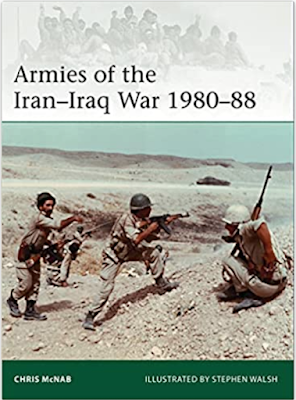
Review Armies of the Iran-Iraq War 1980-1988

McNab, Chris, Armies of the Iran-Iraq War 1980-1988, Oxford Dublin, New York, Osprey Publishing, 2022


This is the second Osprey release on the Iran-Iraq War and it is much better than the first one. That’s largely because it has a limited focus upon the armed forces of the two countries rather than the war in general. The author Chris McNab points out that the two militaries were poorly trained and most importantly not well led by Saddam Hussein and Ayatollah Ruhollah Khomeini who did not care about casualties.

Wednesday, March 17, 2021

Review Saddam Hussein, A Political Biography

Karsh, Efraim and Rautsi, Inari, Saddam Hussein, A Political Biography, New York: Grove Press, 2002


Saddam Hussein, A Political Biography is an up and down book about Saddam Hussein up to the 1990s. It goes from his upbringing to his rise within the Baath Party and then his leadership of Iraq which led to two disastrous wars. Those two conflicts are where authors Efraim Karsh and Inari Rautsi run into some problems especially in their portrayal of the Iran-Iraq War. Their main argument is that Saddam Hussein was a calculating survivor who used pan-Arabism in an attempt to assert his will over the Middle East.

Wednesday, February 3, 2021

Review Ally To Adversary, An Eyewitness Account Of Iraq’s Fall From Grace

Francona, Rick, Ally To Adversary, An Eyewitness Account Of Iraq’s Fall From Grace, Annapolis: Naval Institute Press, 1999


Rick Francona was an American Air Force intelligence officer and a member of the Defense Intelligence Agency. He had a very interesting career. During the Iran-Iraq War he was part of a military liaison team deployed to Iraq. Then during the Gulf War he was the interpreter for General Norman Schwarzkopf. Francona’s book Ally To Adversary, An Eyewitness Account of Iraq’s Fall From Grace is a journal of his involvement with Iraq.

Wednesday, August 19, 2020

Review The Shi’ite Movement in Iraq

Jabar, Faleh, The Shi’ite Movement in Iraq, London: SAQI, 2003


Faleh Jabar was one of the top Iraqi scholars on his home country. He was inspired to write The Shi’ite Movement in Iraq because of the dearth of research on Shiite activism outside of Iran. His main influence was Hanna Batatu’s intense research that led to his The Old Social Classes and the Revolutionary Movements of Iraq. The Shi’ite Movement in Iraq laid out the background that led to the emergence of Shiite reform and revolutionary groups, their leadership, their philosophy, and how they changed over time from the 1950s to the 1990s. Jabar’s thesis was that these parties were beset by divisions, mistakes, and defeats.

Thursday, April 9, 2020

Review The Gulf War, The Origins and Implications of the Iraq-Iran Conflict

Khadduri, Majid, The Gulf War, The Origins and Implications of the Iraq-Iran Conflict, New York, Oxford: Oxford University Press, 1988 

Majid Khadduri wrote several important histories of Iraq from the monarchy to the Baath period. They were known for their insider information as Khadduri was able to interview many of the Iraqi elite over the years. The Gulf War, The Origins and Implications of the Iraq-Iran Conflict does not stand up to those earlier works. The book has three main parts to it. The first third is on the history of Iran and Iraq dating back to the Ottoman and Persian period which argues that the sectarian divide between Sunnis and Shiites and the dispute over the Shatt al-Arab waterway contributed to the Iran-Iraq War. The next half of the book is hugely disappointing as it basically gives the Baathist version of the war without any criticism. The last part is on the Arab states that aligned themselves with the two combatants. The repeating of Baathist propaganda undermines the credibility of the book.  

Thursday, March 26, 2020

How Saddam’s View Of the US As A Threat Led To Kuwait Invasion

Many took US Amb to Iraq Glaspie's meeting with Saddam as the Bush Admin okaying his invasion of Kuwait but that proved wrong (The Diplomat)


When Saddam Hussein invaded Kuwait in 1990 many initially believed this was okayed by the Bush administration. That mainly arose from U.S. Ambassador to Iraq April Glaspie’s meeting with the Iraqi leader just before the conflict started. She told Saddam that the U.S. had no position on the Iraq-Kuwait border issue. That made headlines even though she also told him that the White House opposed the use of force to resolve the matter. Captured Iraqi documents found after 2003 revealed that not only did Saddam not take the conversation with Ambassador Glaspie as a kind of approval, but that he believed invading Kuwait was a way to stand up to what he saw as America’s plots against him.

This Day In Iraqi History - Sep 9 Sheikh Abu Risha announced the Anbar Salvation Council to fight Al Qaeda in Iraq in Ramadi

871 Zanj slave rebellion returned to Basra city Offered amnesty to residents and then massacred them Survivors hid in city for weeks a...