Showing posts with label Iraq Al Qaeda Connection. Show all posts

Friday, June 26, 2026

Review George Tenet, At the Center of the Storm, My Years at the CIA, Harper Collins, 2007


George Tenet was the director of the Central Intelligence Agency under Presidents Clinton and Bush. He eventually resigned because of the controversy over Iraq’s weapons of mass destruction. His book At The Center of the Storm is very interesting because it shows that he was very sensitive about his time at the Agency with several chapters responding to criticisms of his tenure.

Monday, November 10, 2025

Vice President Cheney’s Role In The Iraq War


Almost the entire senior leadership of President Bush’s national security team was for regime change in Iraq. Vice President Dick Cheney was out in front making accusations against Saddam Hussein to justify the invasion. Since he recently passed here is a review of his role in the lead up to the Iraq War.

Monday, February 26, 2024

Thursday, August 10, 2023

Review Debriefing the President: The Interrogation of Saddam Hussein

Nixon, John, Debriefing the President: The Interrogation of Saddam Hussein, New York: Blue Rider Press, 2016


John Nixon was part of a CIA team that was the first to debrief Saddam Hussein after his capture in December 2003. In Debriefing the President: The Interrogation of Saddam Hussein Nixon writes about what kind of person Saddam was, the issues he had with interviewing him, the range of topics they covered and then his criticism of how the Agency and the Bush administration dealt with the Iraq War. Nixon has a very easy writing style allowing the reader to quickly go through and digest the book. His main thesis was that the United States completely misunderstood Saddam which was part of a larger problem of never comprehending Iraq.

Wednesday, January 25, 2023

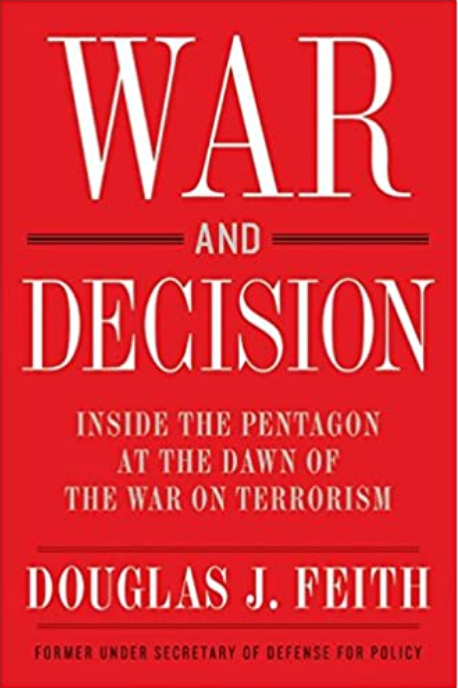
Review War and Decision, Inside The Pentagon At The Dawn Of The War On Terrorism

Feith, Douglas, War and Decision, Inside The Pentagon At The Dawn Of The War On Terrorism, New York: Harper Collins, 2008


Douglas Feith was the Undersecretary of Defense for Policy in the Bush administration. War and Decision, Inside The Pentagon At The Dawn Of The War On Terrorism is his attempt to answer the critics of the decision to invade Iraq in 2003. His problem was that he tried to make this argument using what was known in 2008 when the justifications for war had been disproven. He twists and turns events and omits others to try to say that Saddam Hussein was a threat to the United States while blaming the State Department, the Central Intelligence Agency and Paul Bremer for everything that went wrong. War and Decision is an amazing example of verbal gymnastics but ironically exposes many of the problems with the Iraq War.

Thursday, April 14, 2022

Chilcot Inquiry Section 3.7 Development of UK Strategy and Options, 1 February to 7 March 2003


In the months immediately before the March 2003 invasion of the Iraq the number one priority of Prime Minister Tony Blair’s government was
getting a second United Nations resolution to authorize the use of force against Saddam Hussein. This was despite the fact that the weapons inspectors had found nothing, and France, Russia and others on the U.N. Security Council opposed going to war. Despite that Blair was convinced that he could win the day. He would be proved wrong again and again.

Monday, March 21, 2022

Chilcot Report Section 3.5 Development of UK Strategy and Options September to November 2002 – Negotiation of Resolution 1441

From September to November 2002 the main issue before the Blair government was how to approach the United Nations and deal with the United States’ opposition to that move. Prime Minister Tony Blair’s only victory so far with the Bush administration was to convince the president to go to the U.N. to get a new resolution on Iraq. Now there were disputes over whether one or two resolutions were needed to go to war. The Blair government was told that two would be necessary, and the problems that would cause with the Americans, but Blair went ahead anyway taking the risk that things would work out.

Thursday, March 10, 2022

Chilcot Report Section 3.1 Development of UK Strategy and Options On Iraq, 9/11 to Early January 2002


Section 3.1 of the Chilcot Report documented the United Kingdom’s continued problems with its Iraq strategy at the start of the 2000s. London realized that international opinion had turned against its containment policy of sanctions and demanding weapons inspectors return to Iraq, yet it had no alternatives. Then 9/11 happened, opening the door to advocates of regime change within the new Bush administration. The Blair government initially believed that his Iraq policy didn’t have to change, but finally decided that getting rid of Saddam had to be on the table. That was the start of London following Washington for the rest of the decade.

Tuesday, October 20, 2020

Review Zarqawi, The New Face of Al-Qaeda

Brisard, Jean-Charles, Zarqawi, The New Face of Al-Qaeda, New York: Other Press, 2005


Jean-Charles Brisard’s Zarqawi, The New Face of Al-Qaeda was one of the first two books written about the subject. Published in 2005 it does a very good job detailing Abu Musab al-Zarqawi’s life in Jordan and his two trips to Afghanistan. The problem is it also used a lot of early information which later proved wrong. That means Zarqawi’s relationship with Al Qaeda and his role in the Iraqi insurgency is almost completely off. Not only that but Brisard claimed that Zarqawi was not a strategist and only relied upon ultra-violence missing the fact that was part of his plan all along. The book therefore is very up and down.

Friday, September 25, 2020

Review Saddam, His Rise and Fall

Coughlin, Con, Saddam, His Rise and Fall, New York, London, Toronto, Sydney: Harper Perennial, 2005


Saddam, His Rise and Fall by Con Coughlin is a wildly inconsistent biography of Saddam Hussein. On the good side it connects Saddam with the history of Iraq providing lots of background to his life and the country he ruled. One bad aspect was Coughlin liked sensationalist stories which were easy to find about a dictator like Saddam. The bigger problem was that it bought into Britain and America’s justification for the 2003 invasion that Iraq had WMD and was connected to Al Qaeda. Coughlin’s thesis was that Saddam made an unexpected rise through the Baath Party and then onto leading Iraq.

Wednesday, September 23, 2020

Review Against All Enemies, Inside America’s War on Terror

Clarke, Richard, Against All Enemies, Inside America’s War on Terror, New York, London, Toronto, Sydney: Free Press, 2004


Richard Clarke’s Against All Enemies, Inside America’s War on Terror was an early criticism of the Bush White House and its invasion of Iraq. Clarke worked for four administrations dealing with terrorism under Clinton and the second Bush. Clarke’s argument was that after 9/11 rather than focusing upon Al Qaeda President Bush decided to go after Saddam Hussein making the situation worse. The problem is that half the book is about Clarke’s entire time in government covering many topics that have nothing to do with his point.

Thursday, June 18, 2020

Review What Happened, Inside the Bush White House and Washington’s Culture of Deception


Scott McClellan was the White House spokesman from 2003-2006. He was a Texan who helped with George Bush’s presidential campaign in 2000, was the deputy White House Press Secretary, and then took over that position in May 2003. He originally believed Bush’s campaign promise that he would change the culture in Washington D.C., but he was completely disappointed. His book What Happened, Inside the Bush White House and Washington’s Culture of Deception was a criticism of what he felt went wrong with the Bush presidency. He wrote that Bush was not truthful with the public, was incapable of changing his mind after he made a decision and approached everything like it was a political campaign where winning the debate was the only thing that mattered.

Wednesday, March 11, 2020

Laurie Mylroie’s Iraq Conspiracy Theory Was Debunked By Captured Baath Documents


Deputy Defense Secretary Paul Wolfowitz was a big fan of Laurie Mylroie and her theories about Iraq. In April 2001, during the first discussion of terrorism by the new Bush administration, Wolfowitz brought up Mylroie’s claim that Iraq was behind the 1993 World Trade Center bombing, and therefore Baghdad not Al Qaeda should be the focus of any counter terrorism strategy. In June, the deputy secretary tried to get the CIA to look into Mylroie’s theory. On September 17, 2001 Wolfowitz sent a memo to Defense Secretary Donald Rumsfeld advocating for the United States to attack Iraq in retaliation for 9/11. He said there was a better than 10% chance that Baghdad was behind the strikes on New York and Washington D.C. He included the 1993 bombing. Later, he sent former CIA Director James Woolsey to England to find evidence to support Mylroie’s story. Finally in November 2001 Wolfowitz wrote Rumsfeld again saying that Iraq was probably involved in 9/11 based upon Mylroie’s ideas of links between Saddam and Al Qaeda from 1993. Mylroie’s theories about Iraq and terrorism were popular amongst neoconservatives like Wolfowitz, but were totally convoluted and later proven false by captured Iraqi documents.

Tuesday, March 10, 2020

Section 3.7 Development of UK Strategy and Options, 1 February to 7 March 2003


In the months immediately before the March 2003 invasion of the Iraq the number one priority of Prime Minister Tony Blair’s government was getting a second United Nations resolution to authorize the use of force against Saddam Hussein. This was despite the fact that the weapons inspectors had found nothing, and France, Russia and others on the U.N. Security Council opposed going to war. Despite that Blair was convinced that he could win the day. He would be proved wrong again and again.

Wednesday, December 18, 2019

Chilcot Report Section 3.5 Development of UK Strategy and Options September to November 2002 – Negotiation of Resolution 1441


Chilcot Report Section 3.5 Development of UK Strategy and Options September to November 2002 – Negotiation of Resolution 1441

PM Blair was convinced he could change Pres Bush's opinion about going to the U.N. over Iraq (AFP)


From September to November 2002 the main issue before the Blair government was how to approach the United Nations and deal with the United States’ opposition to that move. Prime Minister Tony Blair’s only victory so far with the Bush administration was to convince the president to go to the U.N. to get a new resolution on Iraq. Now there were disputes over whether one or two resolutions were needed to go to war. The Blair government was told that two would be necessary, and the problems that would cause with the Americans, but Blair went ahead anyway taking the risk that things would work out.

Thursday, September 19, 2019

Review Plan of Attack: The Definitive Account Of The Decision To Invade Iraq


Review Woodward, Bob, Plan of Attack: The Definitive Account Of The Decision To Invade Iraq, New York, London, Toronto, Sydney: Simon & Schuster, 2004

Plan of Attack: The Definitive Account Of the Decision To Invade Iraq was the second of four books by Washington Post reporter Bob Woodward on the Bush administration’s wars in Afghanistan and Iraq. Like Woodward’s other work he provides an insider look at the White House and its decision making based upon interviews with top sources such as the president himself. Woodward provides few comments and no analysis. Plan of Attack is important for several reasons. First, it breaks down the characteristics of the major players in the government. Second, Woodward details the main decisions that led up to the 2003 invasion of Iraq. Finally, he highlights the fact that President Bush and his top advisers did not understand the war they were getting into. Almost their entire focus was upon deposing Saddam Hussein, when Bush said his ultimate goal was to transform Iraq into a democracy. The lack of a strategy to achieve that aim was why Iraq fell into chaos immediately after the 2003 invasion and has been plagued by problems ever since then.

Wednesday, September 11, 2019

Review State of War, The Secret History of the CIA and the Bush Administration


Review Risen, James, State of War, The Secret History of the CIA and the Bush Administration, New York, London, Toronto, Sydney: Free Press, 2006

James Risen of the New York Times focused upon the war on terror in State of War, The Secret History of the CIA and the Bush Administration. The book covers the fight against terrorism after 9/11, the Iraq war, and spying on Iran and its nuclear program to name a few. Risen argued that more things went wrong then right for the Bush presidency, and that there were abuses along the way.

Thursday, August 15, 2019

Review Hubris, The Inside Story of Spin, Scandal, And The Selling Of The Iraq War


Isikoff Michael and Corn, David, Hubris, The Inside Story of Spin, Scandal, And The Selling Of The Iraq War, New York: Crown Publishers, 2006

Hubris focused upon the Bush administration’s argument for the 2003 invasion of Iraq and its aftermath in the United States. It’s an apt title because the White House argued that it was positive that Saddam Hussein was a threat to America, that the war would be easy, and the post-war situation easier. Not only that but the day the invasion ended, things began going wrong. The administration’s response was to ignore the bad news for years. Authors Michael Isikoff and David Corn focused upon the weapons of mass destruction and Iraq-Al Qaeda claims made by the U.S. and how they came apart. The second half of the book gets lost in the story of Joseph Wilson and his wife Valerie Plame that were targeted by the White House for Wilson’s criticism of a story that Iraq tried to buy uranium from Niger. Hubris turned from what administration officials said about Iraq and how they were wrong to what administration officials and reporters said about Wilson and Plame. The latter is far less interesting than the former.

Wednesday, May 29, 2019

Review Leap of Faith, Hubris, Negligence, and America’s Greatest Foreign Policy Tragedy


Review Mazarr, Michael, Leap of Faith, Hubris, Negligence, and America’s Greatest Foreign Policy Tragedy, New York: Public Affairs, 2019

RAND’s Michael Mazarr wanted to bring together all the research, reports and memoirs on the decision to invade Iraq in 2003 into one book and analyze what led to this momentous decision. As he wrote, it was a completely unjustified war. Iraq possessed no weapons of mass destruction, and had no connections to Al Qaeda. This is not hindsight, because if the government had gone closely through the intelligence it could have ascertained this. Not only that, but the United States failed to achieve its goal of spreading democracy across the Middle East and deterring future terrorism and jihadism. The overall lesson of Iraq was that the United States put itself into a quagmire and exhausted itself in the process. In the end, Mazarr believes this was an example of criminal negligence because the Bush administration never had a debate about the rational for war, never went through the information on Iraq or consider the risks and consequences. This was the strong point of Leap of Faith. Where Mazarr fell short was his overall thesis for why America chose war. If someone asked Mazarr why Iraq? He would ultimately say because the U.S. thought it could do good. He argued politicians believed the United States had a special mission in the world to fix its problems and the Bush White House made a value judgement about attacking Iraq rather than an analytical one. This explanation would make no one happy.

Tuesday, April 30, 2019

Chilcot Report Section 3.1 Development of UK Strategy and Options On Iraq, 9/11 to Early January 2002


Section 3.1 of the Chilcot Report documented the United Kingdom’s continued problems with its Iraq strategy at the start of the 2000s. London realized that international opinion had turned against its containment policy of sanctions and demanding weapons inspectors return to Iraq, yet it had no alternatives. Then 9/11 happened, opening the door to advocates of regime change within the new Bush administration. The Blair government initially believed that it still didn’t have to change, but finally decided that getting rid of Saddam had to be on the table. That was the start of London following Washington for the rest of the decade.

This Day In Iraqi History - Sep 9 Sheikh Abu Risha announced the Anbar Salvation Council to fight Al Qaeda in Iraq in Ramadi

871 Zanj slave rebellion returned to Basra city Offered amnesty to residents and then massacred them Survivors hid in city for weeks a...